Table of Contents
Updated : Feb 10, 2026
Booking.com’s discount ecosystem can lift conversion—but unmanaged stacking and always-on deals can quietly drain margins. This guide explains how discount types work, how to map them to your occupancy goals, and how Booking.com’s dynamic pricing software for hosts (like PriceLabs) uses AI to target only the incentives you truly need. You’ll learn how to audit current promotions, coordinate prices across OTAs, and factor in commission and cancellation policies—so you maximize revenue without over‑discounting.
Dynamically Price Your Property and Get FREE Custom Reports Tailored To Your Property!
Use PriceLabs Dynamic Pricing to competitively and dynamically price your property according to demand shifts and analyze past performance to set a strong pricing strategy for your property.
Create your Account NowUnderstanding Booking.com Discount Types and Rules
Booking.com offers two broad discount approaches: proactive deals you plan ahead to stimulate demand (such as Early Booker, Getaway, and Last‑minute) and reactive promotions designed for short bursts of visibility (for example, seasonal “deep” campaigns like Black Friday) that you deploy to capture spikes or fill gaps quickly. Booking.com provides guidance on setting and controlling these offers in its promotions guidance, including depth, dates, and targeting options such as mobile and geo rates.
Deep deals are short‑lived, highly visible campaigns built for surges (think Black Friday). They typically run on tight windows, carry stronger transparency requirements, and often won’t stack with other discounts or loyalty offers; instead, Booking.com prioritizes the strongest eligible incentive for that traveler segment.
As a rule of thumb:
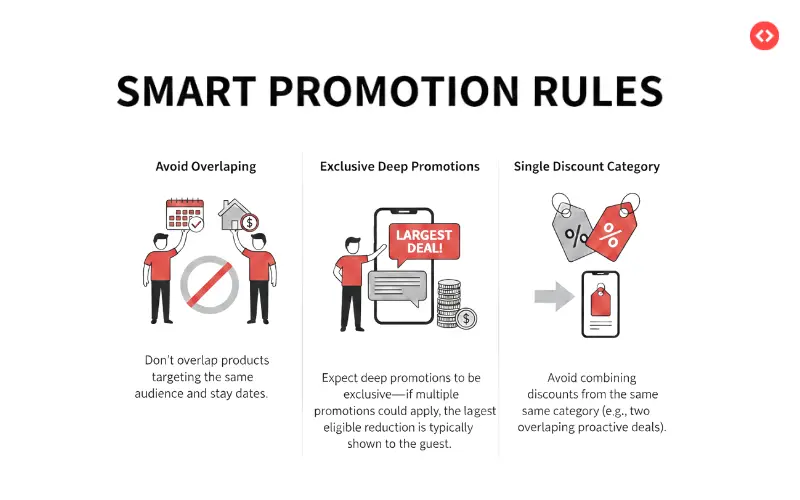
- Don’t overlap products targeting the same audience and stay dates.
- Avoid combining discounts from the same category (e.g., two overlapping proactive deals).
- Expect deep promotions to be exclusive—if multiple promotions could apply, the largest eligible reduction is typically shown to the guest.
Booking.com’s Promotions API lets connected software create and orchestrate targeted offers—such as mobile‑only or geo‑specific rates—with eligibility rules and time windows you can automate at scale.
Summary of common deal mechanics:
- Early Booker: Proactive, set weeks/months ahead to pull forward demand; can coexist with mobile/geo targeting; avoid overlapping with similar long‑lead incentives.
- Last‑minute: Proactive, short booking windows for near‑term arrival; use sparingly on high‑demand weekends to prevent underpricing.
- Getaway/Seasonal: Proactive calendar blocks to fill shoulder periods; pair with mild mobile/geo tweaks if needed.
- Deep/Black Friday: Reactive, short‑run, high‑visibility; generally non‑stacking with other strong discounts.
Dynamically Price Your Property and Get FREE Custom Reports Tailored To Your Property!
Use PriceLabs Dynamic Pricing to competitively and dynamically price your property according to demand shifts and analyze past performance to set a strong pricing strategy for your property.
Create your Account NowAuditing Current Pricing and Setting Revenue Goals
Start by quantifying how discounts are performing today—by channel, segment, and date range.
- Measure discount depth vs. conversion lift: Are deeper cuts truly driving incremental bookings, or are they just lowering rates for guests who would have booked anyway?
- Track Average Daily Rate (ADR)—total room revenue divided by rooms sold—as your core price‑quality barometer.
- Monitor RevPAR and net margin after commissions and refunds to determine whether discounts generate profitable demand.
A simple two‑step checklist:
- Gather data from Booking.com reports, your PMS, and your pricing tool: discount depth, booking pace, ADR, RevPAR, cancellation rate, and net revenue by offer.
- Benchmark current discounting against conversion and ADR targets; identify where you can hold or lift ADR while preserving conversion.

Set measurable objectives like: reduce average discount depth by 10–15% while keeping conversion flat or better; increase ADR on high‑demand Fridays by 5% without losing occupancy; or increase the non‑refundable mix to offset cancellation-cost exposure. Anchoring goals to ADR and RevPAR keeps discounting honest and outcome‑focused.
Segmenting Demand to Target Discounts Effectively
Demand segmentation groups bookers by behaviors such as booking timing (early vs. late), geography, price sensitivity, device, or length of stay. This lets you present incentives only when needed, rather than cutting prices for everyone.

AI pricing software flags price‑sensitive cohorts—so the right segment sees a tailored nudge while full‑price‑willing guests keep your rate integrity intact. Examples:
- Last‑minute bookers: Often price sensitive; consider modest, short‑window offers to fill remaining inventory.
- Corporate or loyal guests: Typically value reliability and policy compliance; hold rates and emphasize flexibility or perks over discounts.
- Geo‑specific searches: Use geo rates to win emerging source markets without discounting globally.
- Mobile shoppers: Offer a small mobile‑only incentive to capture on‑the‑go bookings without training desktop users to expect lower prices.
- Extended‑stay travelers: Replace percentage‑off deals with curated length‑of‑stay discounts that protect high‑demand nights.
Dynamically Price Your Property and Get FREE Custom Reports Tailored To Your Property!
Use PriceLabs Dynamic Pricing to competitively and dynamically price your property according to demand shifts and analyze past performance to set a strong pricing strategy for your property.
Create your Account NowMapping Booking.com Deals to Your Pricing Objectives
Match each deal to an explicit objective and demand window to avoid cannibalization:
Step‑by‑step flow:
- Slow future periods: Use Early Booker or seasonal Getaway deals to build a base at controlled discount depths.
- Normal demand with pockets of softness: Target mobile/geo rates via API to specific cohorts instead of lowering prices site‑wide.
- Sudden spikes or events: If visibility is key, deploy a time‑boxed deep promotion; otherwise, hold rates and ride organic demand.
- Last‑minute gaps: Use restrained, short‑window last‑minute deals that taper as pickup accelerates.
When multiple offers could apply to the same search, Booking.com will typically show the largest eligible incentive for that traveler segment; run only one promotion per target audience, and stay window to prevent dilution. API‑enabled mobile and geo rates provide the granularity to focus discounts where they matter most.
Dynamically Price Your Property and Get FREE Custom Reports Tailored To Your Property!
Use PriceLabs Dynamic Pricing to competitively and dynamically price your property according to demand shifts and analyze past performance to set a strong pricing strategy for your property.
Create your Account NowImplementing Intelligent Discounts with Pricing Software
AI dynamic discounting adjusts offers in real time based on guest behavior, inventory, demand signals, and your constraints—setting only the minimum effective discount required to convert. In broader digital commerce, personalized incentives have been shown to lift conversion by 30–50% while reducing blanket discounting, a principle hospitality teams can apply with guardrails for rate integrity.
How it works in practice:
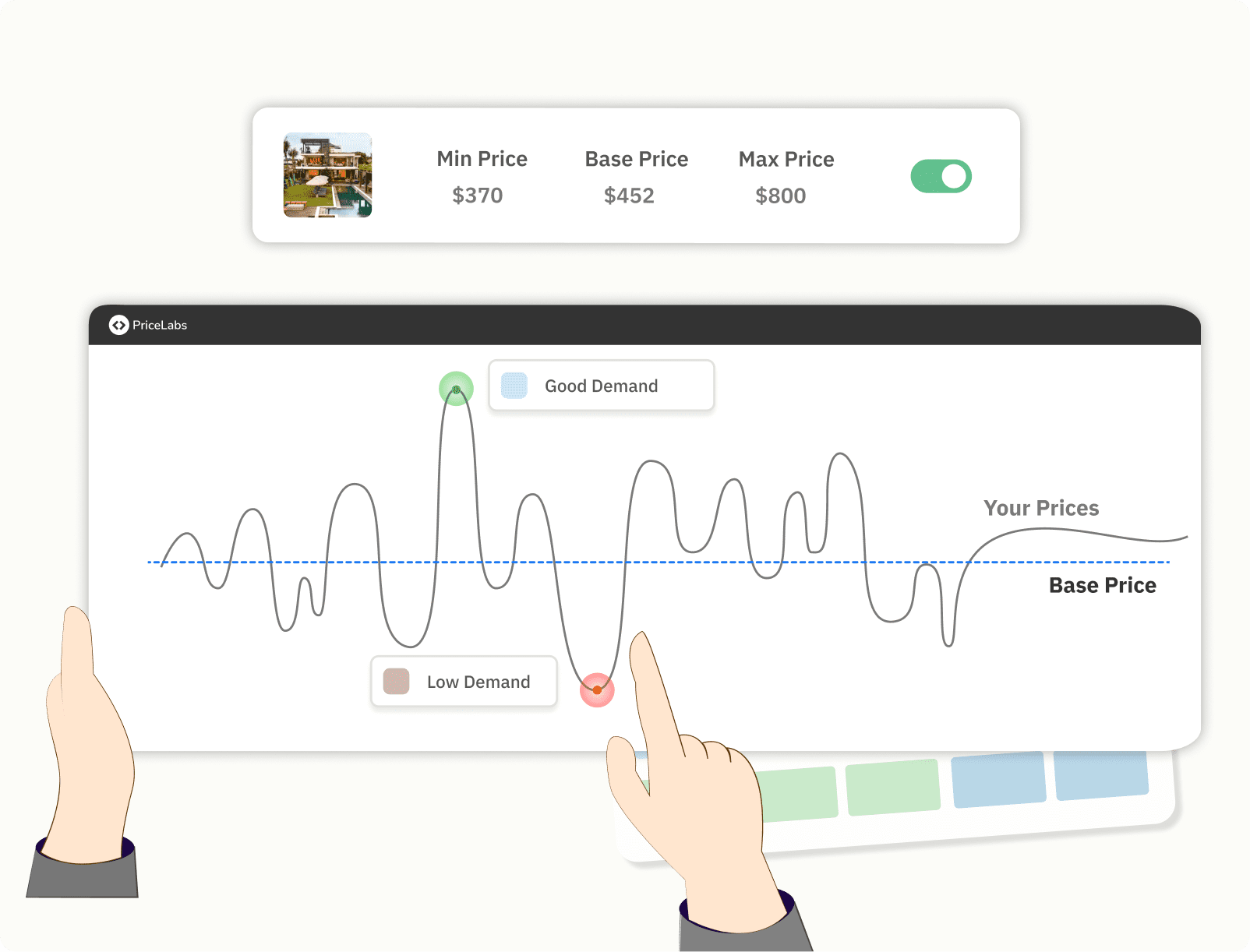
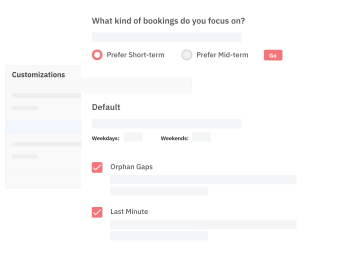
- The AI evaluates hundreds of data points—search device, lead time, stay pattern, pace, comp‑set pressure, and remaining inventory.
- It tests for the smallest viable incentive (or none) that meets your ADR and occupancy targets, and automatically retracts discounts when demand strengthens.
Manual vs. AI discounting:
| Capability | Manual setup | AI‑driven discounting |
| Speed and coverage | Periodic updates; risk of stale offers | Continuous, real‑time adjustments across listings |
| Accuracy | Broad rules; prone to over‑discounting | Segment‑level, minimum‑needed incentives |
| Revenue impact | Occupancy gains may erode ADR | Balanced conversion with ADR and RevPAR protection |
| Effort | High operational overhead | Automated execution with clear guardrails |
PriceLabs combines AI hotel revenue management with configurable controls—so you set floors, caps, and brand rules while the system personalizes discounts and retracts them as pickup improves.
Dynamically Price Your Property and Get FREE Custom Reports Tailored To Your Property!
Use PriceLabs Dynamic Pricing to competitively and dynamically price your property according to demand shifts and analyze past performance to set a strong pricing strategy for your property.
Create your Account NowUsing Pricing Software to Coordinate Across Multiple OTAs
Channel‑based pricing means tailoring rates and incentives by distribution platform to balance visibility, commission, and profitability.
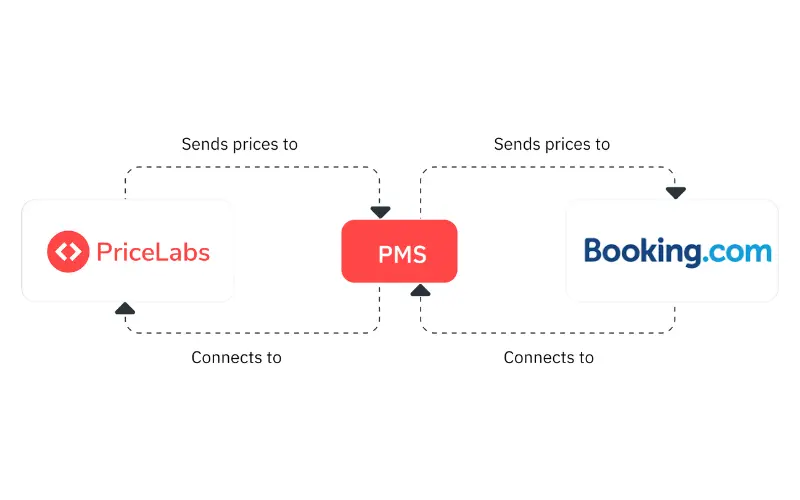
With PriceLabs, you can:
- Set base prices, differentials, and minimum stays across Booking.com, Airbnb, Vrbo, and more from one dashboard.
- Automate occupancy‑ and event‑based nudges to prevent underpricing on high‑demand weekends.
- Coordinate OTA‑specific tactics—such as modest mobile or geo adjustments—while maintaining strategic parity where needed.
Workflow for multi‑OTA coordination:
- Define your channel strategy: parity vs. deliberate differentiation.
- Configure channel‑specific markups/markdowns and policy‑aligned offers.
- Sync inventory and rates via PMS/channel manager.
- Monitor pickup and adjust differentials automatically as demand shifts.
PriceLabs integrates with Booking.com through channel partners and official connectivity, enabling reliable, scalable multi‑OTA pricing orchestration.
Dynamically Price Your Property and Get FREE Custom Reports Tailored To Your Property!
Use PriceLabs Dynamic Pricing to competitively and dynamically price your property according to demand shifts and analyze past performance to set a strong pricing strategy for your property.
Create your Account NowManaging Commission Structures and Cancellation Policies in Pricing Tools
Commission rates vary by OTA and directly impact net revenue. Booking.com’s commission and cancellation mechanics should inform both your headline rates and your discount strategy—especially when comparing net yield across channels.

Within pricing software, build rules that:
- Offset higher commission by adjusting channel markups while keeping your net rate target consistent.
- Pair non‑refundable rate plans with small incentives to reduce cancellation risk.
- Offer value—not just discounts—for flexible bookings (e.g., late checkout or parking) to protect ADR.
- Map cancellation windows to price ladders: shorter free‑cancel windows can support slightly lower rates; fully flexible should command a premium.
Aligning policy and price prevents leakage from no‑shows and late cancellations while keeping your net revenue steady across channels.
Dynamically Price Your Property and Get FREE Custom Reports Tailored To Your Property!
Use PriceLabs Dynamic Pricing to competitively and dynamically price your property according to demand shifts and analyze past performance to set a strong pricing strategy for your property.
Create your Account NowLeveraging Data Analytics to Outperform Competitors on Booking.com
Real‑time competitor benchmarking compares live rates, occupancy trends, booking pace, and local events to fine‑tune pricing. Modern revenue systems aggregate these signals to predict demand and set optimal prices dynamically.
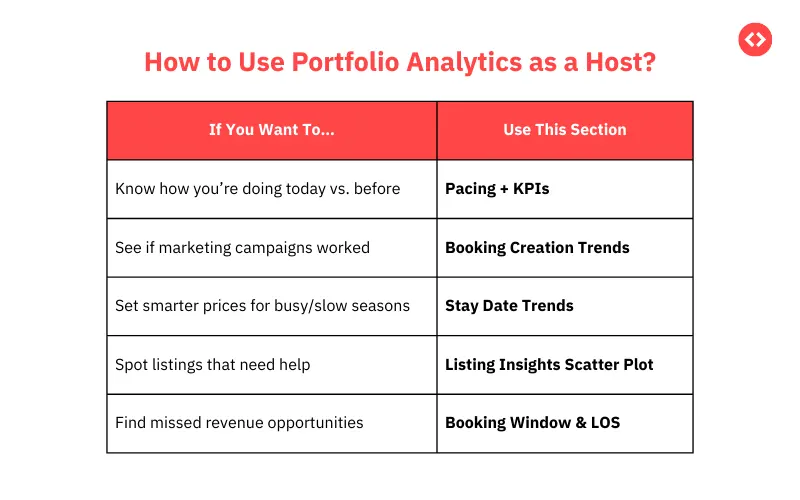
In PriceLabs, use analytics dashboards to:
- Track ADR gaps vs. your competitive set by date and stay pattern.
- Identify opportunities for value‑adds over price cuts when you already lead on perceived value.
- Run controlled tests—vary discount depth or switch to targeted mobile/geo offers—and confirm uplift in net revenue, not just occupancy.
Measuring Success and Iterating Your Discount Strategy
Measure relentlessly and iterate quickly.
Core KPIs:
- Conversion lift versus control
- ADR and RevPAR
- Discount depth and share of discounted bookings
- TRevPAR—total revenue from all sources per available room—to capture the full impact of discount strategies on ancillary spend
Run A/B tests by date cohorts or listings, review post‑campaign results, and prioritize tactics that add value (fencing, packaging, mobile/geo targeting) over broad percentage cuts.
Dynamically Price Your Property and Get FREE Custom Reports Tailored To Your Property!
Use PriceLabs Dynamic Pricing to competitively and dynamically price your property according to demand shifts and analyze past performance to set a strong pricing strategy for your property.
Create your Account NowMonth‑end review checklist:
- Compare ADR/RevPAR with and without discounts by segment.
- Audit stacking and remove overlapping offers.
- Recalibrate floors/caps and lead‑time rules.
- Refresh demand calendars and event overrides for the next 60–90 days.
Frequently asked questions
How does dynamic pricing software avoid over-discounting on Booking.com?
Dynamic pricing software like PriceLabs uses AI to analyze booking trends, guest behavior, and inventory in real time, applying only the minimum necessary discount to convert while retracting offers as demand strengthens.
What role does segmenting demand play in discount optimization?
Segmentation ensures only price-sensitive cohorts receive incentives, reducing overall discount depth and preserving ADR with minimal impact on conversion.
How can pricing tools help manage different OTA commission rates?
They allow channel-specific price adjustments and promotions so your net rates stay consistent after commission, protecting margins across platforms.
Why is it important to use targeted promotions instead of blanket discounts?
Targeted promotions concentrate value where it’s needed, while blanket discounts train all guests to expect lower prices and erode long-term profitability.
How do cancellation policies influence pricing adjustments on Booking.com?
Pricing tools can vary incentives and rate fences by policy, encouraging non‑refundable bookings or pricing flexible options higher to balance risk and revenue.