
Table of Contents
Updated : Feb 5, 2026
The holiday season—specifically Thanksgiving, Christmas, and New Year’s—is a critical period for any Short-Term Rental (STR) portfolio. While some markets skyrocket, others lag, creating a divergence that challenges traditional revenue management strategies.
Based on a recent analysis of markets across the US and the insights from our latest RevLabs episode, this article breaks down the performance of both lagging and leading markets and provides actionable, data-driven strategies you can implement right now to optimize your occupancy rates and ADR (Average Daily Rate).
Strategies for Markets Pacing Behind
In markets like Cocoa Beach and Marco Island, Florida, and Park City, Utah, the key challenge is addressing significantly lower-than-expected occupancy for the upcoming holidays.
1. Act Decisively on Minimum Length of Stay (LOS)
When pacing behind, the most critical lever to pull is the length of stay. Markets like Marco Island are seeing strong demand for shorter stays (two to three nights) in the near term, especially over the holidays.
- Relax Restrictions: If your property currently enforces a 5- to 7-day minimum stay for Christmas, immediately relax it to two or three nights. For transient demand, these shorter stays are a healthy third of current bookings.
- Fill Orphan Gaps: Shorter minimum stays strategically fill those one- or two-night holes (orphan gaps) that longer restrictions would leave empty.
- Target Mid-Week Stays: Reducing length of stay restrictions is also key to encouraging mid-week bookings, a classic strategy to boost overall occupancy.
PriceLabs’ MinStay Recommendation tool can also help you set the right minimum stay restrictions for your properties based on market data.
2. Adjust Rate Aggressiveness
While it’s tempting to keep ADR high to protect your potential earnings, noticeably lower demand means holding out for last year’s rates will result in having to “dump rates” at the last minute.
- Be Competitive, Not Aggressive: Especially in markets like Cocoa Beach, which relies on a heavy snowbird segment and is seeing decreased international and transient travel, you must be conservative with your peak holiday rates to fill occupancy gaps.
- Capture Reservations Further Out: If you have the flexibility, try to capture bookings a little further out now at a slightly lower rate, rather than holding out and then being forced to drop rates when the entire market is panicking.
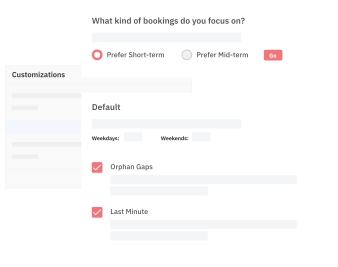
- Don’t Chase the Curve: If you are dramatically behind, you have less leverage. This requires more dramatic ADR changes to catch up, though minor changes in advance are always preferred to making big, last-minute adjustments. PriceLabs customisations will help you set the right discounts and premiums for your different seasons, lead times, occupancy-based adjustments and more.
Turn Insights Into Higher Bookings
Get dynamic pricing, market intelligence, and automation tools that boost your occupancy and ADR—all in one platform with PriceLabs Revenue Management Tool.
Start Your Free Trial Now3. Review Listing Quality and Amenities
In a slow market, every detail matters for conversion. Quick wins on your listing can provide a competitive edge.
- Check Amenity Mismatches: For Marco Island, for instance, certain amenities like beach essentials, cooking basics, and hot water were noted as having a high mismatch (present but not checked off). Take five minutes to ensure every available amenity is checked in your listing.
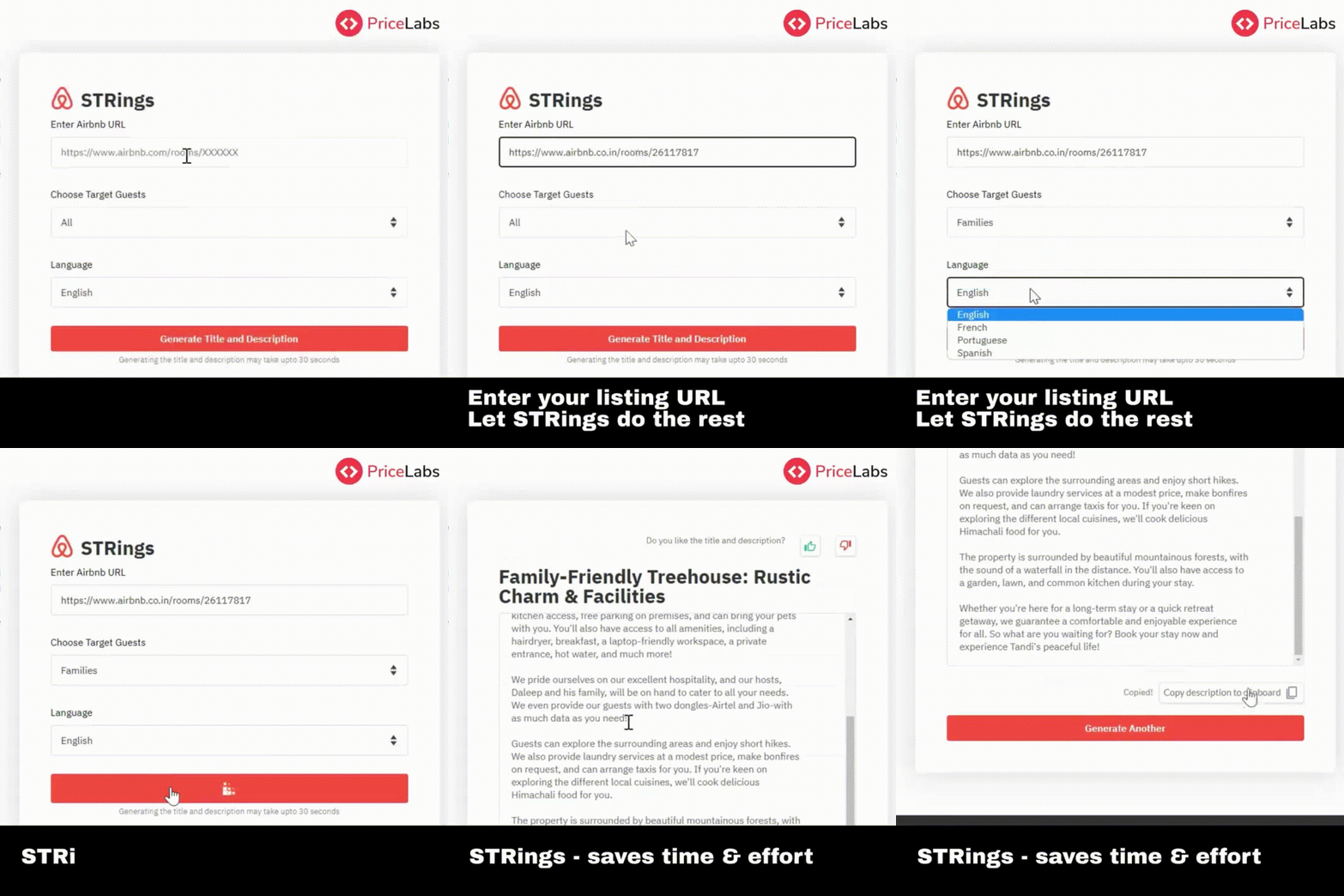
- Reoptimize Keywords: Ensure your listing description and title are optimized with relevant keywords that reflect non-peak market trends and highlight unique selling propositions. You can use the free Airbnb Description Generator tool to create an optimised title and description for your listing.
- Upsell Value: Enhance the guest experience with short-term rental upsells, such as small upgrades or personalised touches, which can lead to better reviews and conversions.
Strategies for Markets Pacing Ahead
In top-performing markets like Beech Mountain, North Carolina, Pompano Beach, Florida, and Sevierville, Tennessee, the strategy shifts from catching up to maximizing ADR and protecting the booking window.
1. Hold Out for Premium ADR
If your market’s occupancy is pacing ahead, the market data gives you the edge to be the last man standing.
- Avoid Being “Sniped”: Because demand is strong, do not drop your rates too early to secure a booking. You should hold out a little longer to secure a higher premium, even if your personal portfolio is slightly behind the market average.
- Push Rates Up: In a healthy market that’s pacing ahead in occupancy, you have time to look for room to raise your rates, especially in the mid-term (e.g., February to April in Pompano Beach).
- Small, Consistent Adjustments: Even when pacing ahead, focus on minor, consistent ADR adjustments rather than massive last-minute changes.
2. Strategically Tighten Minimum Stays
In high-demand markets like Sevierville, where two- to three-day stays are the majority during the holidays, you must balance ADR with operational efficiency.
- Increase for High Demand Dates: If you’re seeing one-night bookings for high-demand dates, consider increasing your minimum length of stay (MLOS) to two to three nights to reduce the number of turnovers and increase your profit margin.
- Segment by Bedroom Size: Apply different minimums based on segmentation. Smaller homes (studios, one-bedrooms) are better for filling last-minute, shorter-stay gaps, while larger homes should aim for longer, more profitable stays.
- Operational Considerations: With rising cleaning costs, one less turnover can yield a higher profit margin than two turnovers. Minimum length-of-stay adjustments are not just a revenue question but also an operational one.
3. Leverage Dynamic Pricing to Beat the Competition
The difference in performance often boils down to the strategic use of data. In a highly managed market like Sevierville, operators using dynamic pricing are the clear winners.
- Outpace Individual Operators: In markets like Beech Mountain, where individual hosts are “crushing it,” professional managers may rely too much on market trends. To quickly outpace them, inject more strategy into your dynamic pricing tool by either slightly undercutting or, during high-demand periods, pricing above the market.
- Optimize Discounts: Even when pacing ahead, ensure you are using weekly or monthly discounts to capture longer-term snowbird and mid-term segments, as a lack of these discounts can be a missed opportunity.
The PriceLabs Connection: Data-Driven Revenue Management
Adaptability is the key to managing a successful STR business, especially during an economic slowdown or divergent market behaviour. The solution lies in a flexible plan that responds to real-time market changes, which is where PriceLabs’ tools become indispensable.
Use PriceLabs Market Dashboard to Understand Market Trends
Before making any strategic pricing or length-of-stay changes, you must determine whether your slowdown is specific to your property or the market as a whole. The Market Dashboard provides real-time KPIs and market data to help property managers make informed decisions.
- Analyze Future Occupancy and Pricing: Review the Future Occupancy chart to see how far ahead the market is pacing compared to last year (or how far behind). The Future Prices chart shows you how property managers are pricing their properties for future dates, enabling you to align your strategy with market norms.
- Optimize LOS and Booking Window: The Length of Stay versus Booking Window chart breaks down the most common LOS being booked (e.g., 2-3 nights, 7-14 days) and how far out those bookings are made. Use this data to determine whether you need to lower your minimum-stay restrictions or offer a discount for extended stays.
- Identify Amenity and Discount Opportunities: Quickly identify the most desired amenities and the percentage of listings that offer standard discounts (e.g., weekly/monthly) to ensure your property remains competitive and appealing.

Dynamic Pricing: Your Most Powerful Lever
Static pricing is no longer effective in a competitive and changing market. PriceLabs’ Dynamic Pricing solution automatically tweaks your nightly rates based on real-time market metrics, including seasonality, demand, and local competition.
- Real-Time Rate Adjustment: The tool automatically adjusts your prices based on market demand and syncs them with major platforms like Airbnb and Vrbo.
- Target Midweek and Last-Minute Bookings: Dynamic Pricing helps you implement strategies such as adjusting discounts for orphan gaps or offering last-minute discounts to maintain high occupancy rates during slower periods.
- Protect Profitability: By setting a minimum price, you ensure rates don’t drop below your desired value, finding the optimal balance between attracting guests and maximizing revenue.

Learnings for Property Managers
The 2025 holiday season shows a widening gap between thriving and struggling STR markets. The key lesson for all property managers is that adaptability and data-driven decision-making are non-negotiable. Whether you need to aggressively lower your length-of-stay restrictions and average daily rate to catch up, or strategically hold out to optimize a premium RevPAR, your next move must be informed by real-time market data.
By leveraging sophisticated tools like the PriceLabs Market Dashboards and Dynamic Pricing solution, you can move beyond pricing guesswork and implement a data-backed strategy that positions you to thrive, regardless of external market pressures.
Frequently Asked Questions
Why is my property pacing behind the market for the holidays?
Several factors could be at play, including: overly restrictive minimum length of stay (LOS) requirements, ADR that is too aggressive for current market demand, decreased transient or international travel (e.g., the snowbird segment in Florida), or an increase in supply in your area not outpaced by demand. Analyzing your pacing against last year’s performance using tools like the PriceLabs Portfolio Analytics can help pinpoint the exact cause.
Should I lower my minimum price for a last-minute holiday booking?
In a market that is pacing behind (low occupancy), yes. If you are close to the holiday dates and have low bookings, you must be flexible on both ADR and LOS to fill remaining availability. If your market is pacing ahead (high occupancy), you may not need to drop rates significantly, as high compression often leads to last-minute cancellations and rebookings.
Q: How can I use market data to decide on the right minimum length of stay?
Use the Length of Stay versus Booking Window chart in the PriceLabs Market Dashboard. This chart shows the most frequent LOS booked in your market. If you notice two- to three-night stays are driving most bookings in the near term, you should relax your minimum stay rules to capture this demand. For higher-demand periods like spring break, however, you might want to increase your MLOS to maximize your ADR and reduce turnovers.