
Table of Contents
Updated : Mar 10, 2026
The Spanish short-term rental (STR) market has officially entered a new era. In early 2026, the industry is no longer defined by the post-pandemic “gold rush” but by a structural shift toward professionalization and strict regulatory compliance. While headlines often focus on local protests and supply “crashes,” the underlying data tells a story of a market that is consolidating, maturing, and—for those playing by the rules—becoming more profitable.
Spain is currently the second most visited country in the world, expecting to reach a staggering 100 million international tourists by the end of 2026. However, the way these guests find and book accommodation has fundamentally changed. With the nationwide implementation of the Digital Single Window for Rentals (VUDA) and a major cleanup of over 200,000 illegal listings, 2026 is the year where data-driven professional managers are outperforming the “casual host” more than ever before.
Executive Summary: High-Level Market Performance
Spain’s STR market is currently navigating a period of supply contraction coupled with revenue expansion. National and local regulations have successfully pruned the market of unlicensed supply, which has inadvertently created a “scarcity premium” for legal operators.
- Supply Correction: The active listing count across Spain has decreased by 4% year-over-year (YoY). In hotspots like Ibiza and parts of Andalusia, enforcement has been even more aggressive.
- Revenue Resilience: Despite the drop in total units, RevPAR has grown by 5%, driven by a 2% lift in occupancy and a 3% increase in ADR.
- A “Rate-First” Market: Current booking pacing shows ADR is 6% ahead of last year (STLY), while occupancy remains stable. This indicates that travelers are prioritizing high-quality, legal stays and are willing to pay a premium for them.
- Yield Management is King: 42% of listings now use sophisticated dynamic pricing (16% High DP; 26% Moderate DP), and these properties are capturing the lion’s share of the market’s revenue growth.
The Headline Insight: The market has moved from a “volume game” to a “yield game.” Success in 2026 depends on maximizing the value of every booked night rather than just filling the calendar.
Market Performance Overview
The Spanish STR market is currently in a healthy correction phase. The 4% drop in supply has reduced saturation, allowing compliant operators to regain pricing power.
Past 12-Month Performance (YoY Comparison)
| Metric | 2024-25 Performance | 2025-26 Performance | Change (%) |
| Average Occupancy | 58% | 60% | +2% |
| Average ADR (EUR) | €121 | €125 | +3% |
| RevPAR (EUR) | €73 | €77 | +5% |
| Active Listings | 409,625 | 394,996 | -4% |
Interpretation: What this means for property managers
The 5% increase in RevPAR during a period of listing decline is a strong signal of market consolidation. When supply drops but total revenue per available rental rises, it means the remaining supply is being utilized more efficiently.
- Strategic Takeaway: If your occupancy is flat but your expenses are rising, the data suggests you have room to push ADR by at least 3–5% to stay in line with national averages.
Supply & Demand Dynamics: The Regulatory Cleanup
The single most influential factor in Spain’s 2026 market is the Ventanilla Única Digital de Arrendamientos (VUDA).
The Delisting Wave
In February 2026, the Spanish Housing Ministry ordered platforms like Airbnb and Booking.com to remove over 86,275 listings that failed to meet national registration requirements. This follows a larger wave that has seen over 200,000 listings revoked since the system launched in mid-2025.
- Hotspot Impact: Andalusia saw over 21,000 removals, while Valencia and the Canary Islands each saw roughly 14,000.
- Absorption Rate: Because international demand is still growing (+3.5% in arrivals), the demand that used to go to these illegal listings is now being funneled into the professional, legal supply. This is why occupancy has grown by 2% despite the listing crash.
Operator Strategy: Compliance is no longer just a legal hurdle—it is your primary competitive advantage. Properties that clearly display their unique registration number (NRA) on their profile are seeing higher conversion rates as travelers become more aware of the risks of booking illegal stays.
STOP PRICING BLINDLY: Execute Your Strategy with Dynamic Pricing
Ready to confidently set premium rates? Start optimizing your ADR and short-term rental profitability in Spanish Vacation Rental Market today where the supply is dwindling but RevPAR is strengthening.
Start Your Free Trial NowSeasonality & Booking Patterns
Spain remains a market of “Two Peaks”: the traditional Summer Surge and the growing Urban Autumn.
Current Pacing & Future Outlook
| Month | ADR Pacing (YoY) | RevPAR Pacing (YoY) | Occupancy Pacing (YoY) |
| May 2026 | +6.7% | +22.2% | +2% |
| Aug 2026 | +8.0% | +33.3% | +3% |
Data indicates that travelers are booking peak summer dates with higher budgets than last year.
Lead Time and Length of Stay (LOS)
- Booking Window: The national median booking window for the high season is currently 62–73 days. However, for urban events, we are seeing a “double-peak” where the window stretches to 90 days and then spikes again 14 days out.
- Length of Stay: The annual average LOS is holding steady at 5.4 nights, though coastal regions like the Costa del Sol still see “holiday stays” of 7+ nights.
The Dynamic Pricing Roles: Performance Gap
To truly understand the “Quality Revolution” in Spain, one must look at the performance delta between properties treated as passive investments and those managed with professional revenue strategies. While 2026 has seen a contraction in listing volume, the financial rewards for the “Data-Driven 42%”—those using moderate to high dynamic pricing—have never been higher.
In a market where supply is restricted, the ability to adjust prices daily to capture micro-spikes in demand is no longer an advantage; it is a necessity for survival.
The Dynamic Pricing Performance Gap (2025-2026)
The following table breaks down how different levels of pricing sophistication correlate with actual property performance in Spain.
| Pricing Strategy | Market Distribution (%) | Avg. Occupancy | Avg. ADR (EUR) | Avg. RevPAR (EUR) | Performance Lift (vs. Static) |
| High Dynamic Pricing | 16% | 72% | €163 | €117 | +200% RevPAR |
| Moderate Dynamic Pricing | 26% | 67% | €141 | €94 | +141% RevPAR |
| Low / Limited DP | 23% | 60% | €123 | €74 | +89% RevPAR |
| Static / Manual Pricing | 34% | 47% | €118 | €39 | Baseline |
Deep Dive: What the Data Tells Us
1. The 25% Occupancy Advantage
Listings utilizing High Dynamic Pricing are achieving an average occupancy of 72%, compared to just 47% for static listings. This 25% absolute difference is the result of the algorithm’s ability to lower rates during “trough” periods to capture budget-conscious travelers while aggressively hiking rates during compression events like the Mobile World Congress or the Madrid Open.
2. The “Table Stakes” of ADR
Properties using high DP are commanding an ADR of €163, which is €45 higher per night than manual pricers. Because static hosts often set a “flat rate” for the season, they are frequently overbooked at too low a price for peak weekends and underbooked during the week.
3. Capturing the 6% Pacing Signal
With 2026 ADR pacing 6% ahead of last year, static hosts who haven’t manually adjusted their base rates for inflation and reduced supply are effectively giving away 6% of their potential gross revenue. In contrast, dynamic pricing users are automatically riding this “pacing wave,” capturing the market’s increased willingness to pay without any manual intervention.
4. The RevPAR Multiplier
The most staggering metric is the RevPAR difference. A property on a High Dynamic Pricing strategy generates €117 per available night, while a static property generates just €39. For a professional property manager, this means that a single dynamically priced unit can generate the same bottom-line profit as three manually priced units.
STOP PRICING BLINDLY: Execute Your Strategy with Dynamic Pricing
Ready to confidently set premium rates? Start optimizing your ADR and short-term rental profitability in Spanish Vacation Rental Market today where the supply is dwindling but RevPAR is strengthening.
Start Your Free Trial Now6. Regulatory Landscape: The New “Rules of the Game”
Beyond the national registry, two major legal shifts are impacting profitability in 2026:
1. The 3/5 Majority Rule (HOAs)
Under Organic Law 1/2025, most new STR licenses in multi-owner buildings now require a 60% (3/5) majority vote from the community of owners. This has effectively “locked” supply in existing residential buildings.
- Takeaway: If you already have a license, your property’s value has likely increased because the barrier to entry for new competitors is now nearly insurmountable.
2. The Plan RESIDE (Madrid) and Barcelona 2028
Madrid’s Plan RESIDE has effectively banned new tourist apartments in the historic center’s residential buildings. Meanwhile, Barcelona is moving toward a total elimination of tourist apartments by 2028.
- Takeaway: Strategic property managers are shifting portfolios toward dedicated buildings (non-mixed use) or pivoting toward seasonal rentals (32 days to 11 months), which are not subject to the same STR license requirements.
Strategic Recommendations for 2026
To navigate Spain’s 2026 “Quality Revolution,” property managers must move beyond standard operations. The 4% reduction in national supply has created a seller’s market, but the increased regulatory oversight means your license is your most valuable—and vulnerable—asset.
Here are the expanded tactical shifts required to dominate the Spanish market in 2026:
1. Execute an Aggressive Scarcity-Based Pricing Strategy
With current ADR pacing 6% ahead of last year, the market has already signaled a higher willingness to pay. However, the 4% drop in active listings means the “substitution effect” (guests moving to a cheaper nearby rental) is significantly weakened.
- The Insight: Do not just match the 6% pacing; push for 8–10% higher rates for July and August 2026 compared to your 2025 closing rates.
- Action: Implement steep early-bird rates. If you haven’t secured a booking for peak dates by 90 days out, your rate is likely too low for this supply-crunched environment. In 2026, being 100% booked too early is a sign of lost revenue, not success.
2. Operationalize VUDA Compliance as a Marketing Asset
The National Registry (VUDA) isn’t just a hurdle; it’s a filter that has removed 86,000+ competitors. OTAs like Airbnb and Booking.com are now using AI-driven automated audits that cross-reference your listing number with government databases in real-time.
- The Insight: A clerical error or a missing NRA (Número de Registro de Turismo) can lead to an instant shadow ban or a 48-hour removal during your peak booking window.
- Action: Audit every channel. Ensure your registration number is not only in the designated “license” field but also subtly mentioned in your listing description. This builds traveler trust, as guests are increasingly wary of “ghost listings” that might be cancelled by authorities last-minute.
3. Deploy Hyper-Local Event Overlays
Spain’s 2026 calendar is packed with “compression events”—from the Madrid Open and Mobile World Congress (MWC) to the America’s Cup legacy events.
- The Insight: General market demand might be up 5%, but during these 3–5 day windows, demand spikes by 300–400%. Standard algorithms may miss the nuance of a neighborhood-specific festival or a niche medical conference.
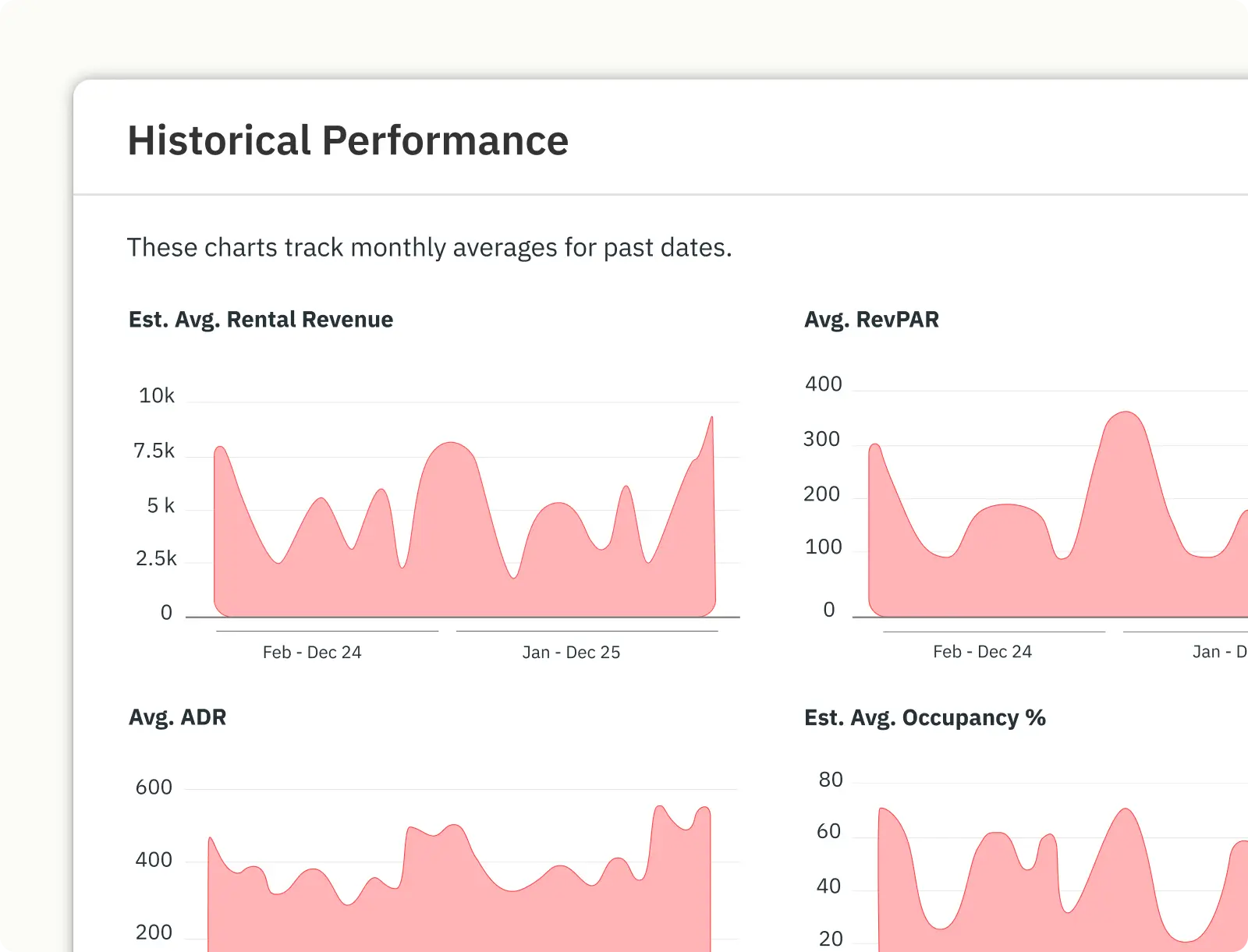
- Action: Use PriceLabs’ Market Dashboards to identify “high-occupancy clusters” 90 to 120 days out. When you see neighborhood occupancy hit 50% while the rest of the city is at 20%, trigger a “Minimum Stay” restriction of 3 or 4 nights and a 20% premium overlay to prevent low-value, one-night bookings from stealing your highest-revenue dates.
4. Invest in Diplomatic Community Management
Under the 3/5 majority rule, your neighbors have more power over your business than ever before. A single noise complaint in 2026 can lead to an HOA (Comunidad de Propietarios) vote that could legally revoke your right to host.
- The Insight: Technology is now your best defense. Noise-monitoring and occupancy sensors (like Minut or NoiseAware) provide the “data evidence” you need to prove to your HOA that your guests are respectful.
- Action: Shift from reactive to proactive community relations. Install decibel monitors that alert you before a neighbor calls the police. Share your “Responsible Hosting Manifesto” with the HOA president, including your 24/7 emergency contact number and your guest-vetting protocols. In 2026, a happy neighbor is a protected license.
5. Pivot to Flexible Inventory (The 32-Day Model)
In cities like Barcelona, where STR licenses are under long-term phase-outs, professional managers are diversifying.
- The Insight: The demand for mid-term rentals (32 days to 11 months) is surging by 12% YoY, driven by digital nomads and corporate relocations. These rentals often bypass the “tourist license” requirement in many Spanish regions.
- Action: Dedicate 10–15% of your portfolio to mid-term stays during the “shoulder” months of February and November. This reduces your regulatory exposure while maintaining a consistent 90%+ occupancy floor for units that would otherwise sit empty or face strict nightly caps.
STOP PRICING BLINDLY: Execute Your Strategy with Dynamic Pricing
Ready to confidently set premium rates? Start optimizing your ADR and short-term rental profitability in Spanish Vacation Rental Market today where the supply is dwindling but RevPAR is strengthening.
Start Your Free Trial NowForward-Looking Outlook
The next 6–12 months in Spain will likely see continued supply tightening. As more autonomous communities adopt the national registry’s data-sharing protocols, the “informal” market will disappear entirely. For professional property managers, this is a positive trend; it stabilizes prices, reduces unfair competition, and elevates the guest experience.
Expect RevPAR to continue growing at 4–6% through the end of 2026, driven by a wealthy international traveler base and a structurally limited supply of legal vacation homes.
Frequently Asked Questions
1. Why is ADR pacing ahead while occupancy is stable?
This is a sign of “pricing power.” Because 200,000+ illegal listings have been removed, guests have fewer options. Professional managers are successfully raising rates (ADR) because travelers have to compete for the remaining legal inventory.
2. What is the VUDA/VUDA registry?
It is Spain’s national Digital Single Window for Rentals. Every STR listing must be registered here to obtain a unique number. Platforms are now legally required to delete any listing that does not have this verified number.
3. Does the “3/5 majority” law apply to my existing license?
Generally, no. The law is not fully retroactive for properties that were legally operating before April 2025. However, if you sell the property or change the license holder, the new regime may apply. Always consult a Spanish legal expert for your specific region.
4. How does dynamic pricing help in a “supply-crunched” market?
When supply drops, local demand spikes (like a concert or holiday) create much higher “compression.” Dynamic pricing captures these spikes instantly, whereas manual pricing usually reacts too late, resulting in bookings that are underpriced for the actual demand.