
Table of Contents
Updated : Jan 29, 2026
As a vacation rental property manager, the urge to scale is real. You want more listings, more bookings, and—ultimately—more revenue. But when it comes to pricing, moving fast and breaking things can lead to empty calendars or, worse, leaving thousands of dollars on the table. The secret to professional-grade growth isn’t just about applying a new strategy; it’s about testing it first. By utilizing Vrbo pricing software for dynamic rate testing, you can run controlled experiments on a subset of your listings to validate your theories. This data-driven approach helps you reduce risk and optimize revenue before a portfolio-wide rollout.
Here are 7 proven ways to test your Vrbo pricing strategies using software and analytics.
1. Leverage PriceLabs Dynamic Pricing for Data-Driven Testing
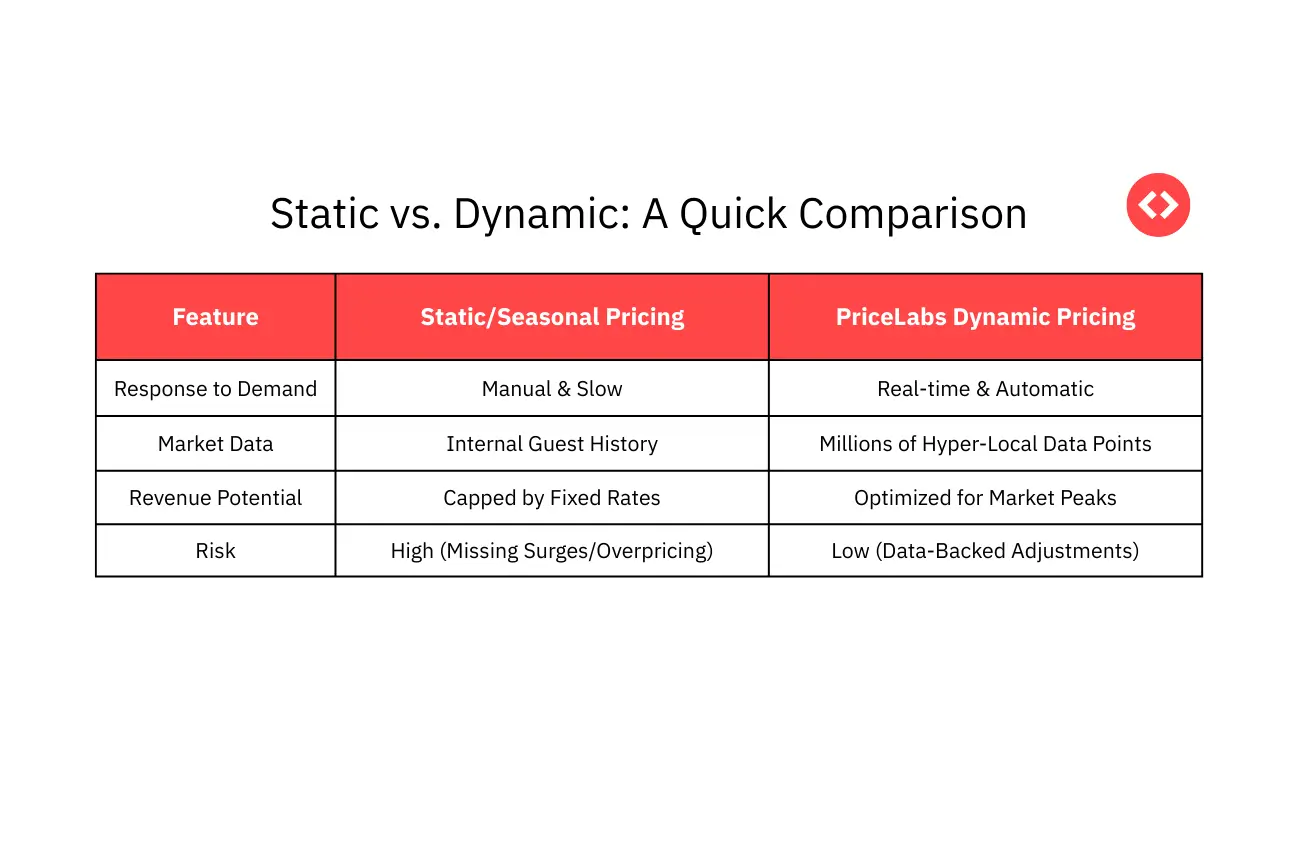
Static, fixed pricing is a relic of the past. To stay competitive on Vrbo in 2026, you need dynamic pricing—the practice of automatically adjusting nightly rates based on real-time market supply, demand, seasonality, and property performance.
PriceLabs is the gold standard for this. It’s an AI-driven tool built for professionals who need to move beyond guesswork. With PriceLabs, you don’t just “set and forget”; you experiment.
- Hyper Local Pulse: Use market analytics to see exactly what’s happening in your specific neighborhood and give you pricing suggestions accordingly.
- Sandbox Modes: PriceLabs allows you to test settings in a “simulated” environment to see how they would have performed.
- Portfolio Analytics: Track how different groups of properties perform under various revenue management strategies.
2. Run Price-Point A/B Tests for Conversion Insights
How much is a guest actually willing to pay? An A/B test helps you find the sweet spot by comparing two different rates for similar listings.
How to execute:
- Select Matched Pairs: Pick two comparable properties (same bedroom count, similar amenities) in the same market.
- Assign Roles: Property Group A gets the “Control” rate (your standard strategy). Group B gets the “Test” rate (e.g., 10% higher).
- Monitor Metrics: Watch your vacation rental KPIs like booking conversion, occupancy, and ADR (Average Daily Rate) over at least 3–4 weeks to ensure statistical significance.
This test quantifies the trade-off: Does a 10% price hike lead to a 5% drop in conversion? If so, your total revenue still goes up, and the test is a success.
Scale Your Vrbo Portfolio with Confidence
Don’t leave your revenue to chance. If you’re managing a growing portfolio and need a robust Vrbo pricing software for dynamic rate testing, our team is here to help you build a custom strategy.
Start Your Free Trial3. Trial Limited-Date Surge Pricing Experiments
Surge pricing isn’t just for Uber. It’s a powerful way to capitalize on weekends, holidays, or local festivals. However, overshooting can lead to zero bookings.
The Strategy:
Identify high-demand dates using the Events, Holidays, and High-Demand Dates Calendar. Instead of raising rates across your entire 50-property portfolio, apply a surge premium to just 5 properties. Monitor the booking pace: if they fill up faster than the market average, your surge was too low. If they sit empty while competitors book, you’ve found your ceiling.
4. Conduct Channel-Specific Promotion Tests
Vrbo guests often behave differently from Airbnb or direct-book guests. Families on Vrbo often book further in advance and stay longer.
You can test whether a Member-Only discount or a specific Vrbo promotion drives a higher fill rate for large homes than your standard rates on other channels.
5. Pilot Promotion and Fee Bundling
Guests are increasingly sensitive to fee creep. Travelers abandon bookings at rates up to 81% overall, with 53% specifically dropping off upon seeing the full price, including added fees. A TravelBoom survey of 300 leisure travelers found 31.5% abandon when discovering hidden fees, with only 30% accepting fees up to 10% of the booking total.
The Experiment:
Try Fee Bundling on a few listings. Move your cleaning fee into the nightly rate and market the property as No Cleaning Fees.
- Test A: $200/night + $150 cleaning fee.
- Test B: $235/night + $0 cleaning fee.
While the total price is nearly identical, the psychological impact on Vrbo search results can dramatically improve your conversion rates.
6. Automate Length-of-Stay (LOS) Discount Pilots
With the rise of “JOMO” (Joy of Missing Out) travel trends, Vrbo guests are looking for longer, more immersive stays. The average solo trip on Vrbo is now 17 nights.
Use PriceLabs to pilot automated LOS discounts:
- Weekly (7+ nights): 10% discount.
- Monthly (28+ nights): 20% discount.
Compare the RevPAR of properties with these automated discounts to that without them. You’ll likely find that stabilizing occupancy with one long-term guest is more profitable than chasing four separate weekend bookings with gaps in between.
7. Test Amenity-Based Value Uplift
Sometimes, the best pricing strategy isn’t a lower price—it’s a better offer. With pet-friendly searches up 30%, adding a “Pet-Friendly” tag could help you increase your base rate by $25/night.
The Process:
- Add a high-demand amenity (e.g., a hot tub, EV charger, or pet-friendly status) to a test group of listings.
- Increase the base price in PriceLabs.
- Evaluate the Net Revenue (after the cost of the amenity) vs. your control listings.
Frequently Asked Questions
What metrics should I track when testing Vrbo pricing strategies?
Focus on RevPAR (Revenue Per Available Rental) as your primary KPI. Also, track occupancy rates, ADR, and booking lead time to see if your changes are shifting guest behavior.
How long should I run pricing experiments to get reliable results?
Most experiments require at least 4 weeks. This allows you to capture a full cycle of weekday and weekend booking patterns and accounts for the “noise” of short-term market fluctuations.
How can software help manage seasonal rate surges effectively?
Tools like PriceLabs use demand forecasting to identify surges months in advance. They automate the rate increases so you don’t have to manually watch the calendar, ensuring you never miss a peak revenue window.
What are the best practices for isolating variables during pricing tests?
Change only one variable at a time. If you change the price and the photos at the same time, you won’t know which one caused the booking. Keep a control group that stays exactly the same for comparison.
How do guest preferences on Vrbo influence pricing experiment design?
Vrbo attracts families and groups. This means your experiments should focus more on length-of-stay discounts and amenity-value testing rather than the hyper-short, last-minute discounting often seen on other platforms.