
Table of Contents
Updated : Apr 2, 2026
Managing a STR portfolio means preparing for the unexpected. One of the most common and frustrating challenges for any vacation rental host or property manager is the sudden notification: Cancellation.
A canceled reservation is more than just a momentary annoyance; it’s an immediate threat to your bottom line, creating an unanticipated gap in your booking calendar. To navigate these situations and maintain your target RevPAR (Revenue per Available Room) and occupancy rates, you need more than a manual workflow. You need an expert, data-driven system. This guide, built for the analytical property manager, will walk you through seven proven revenue management strategies using smart pricing tools for cancellation and rebookings for short-term rentals to not only prevent revenue loss from cancellations but also proactively maximize recovery and guest retention.
Bonus Read: The Ultimate Guide to Dynamic Pricing for Short-Term Rentals
Understanding the True Impact of Cancellations on STR Revenue
Before we dive into solutions, let’s define the problem. A cancellation occurs when a guest withdraws a confirmed reservation, while a rebooking involves a guest modifying the original dates or even the property in their reservation.
While it’s easy to focus on the immediately lost ADR (Average Daily Rate), the total impact is far greater:
- Lost Revenue and Vacant Nights: The primary concern is the sudden decline in projected revenue and the scramble to fill the vacancy.
- Operational Challenges: Cancellations lead to wasted time in operational planning (e.g., staff scheduling, inventory restocking).
- Pricing Gaps: If you manage pricing manually, a cancellation means the now-available dates remain at the old, unoptimized rate, resulting in missed opportunities.
The Data Advantage: Did you know that reservations made through direct bookings often have lower cancellation rates than those made through OTAs, resulting in a steadier income stream? This reinforces the importance of a diverse booking strategy and strong guest communication.
7 Proven Strategies to Proactively Manage Cancellations and Rebookings
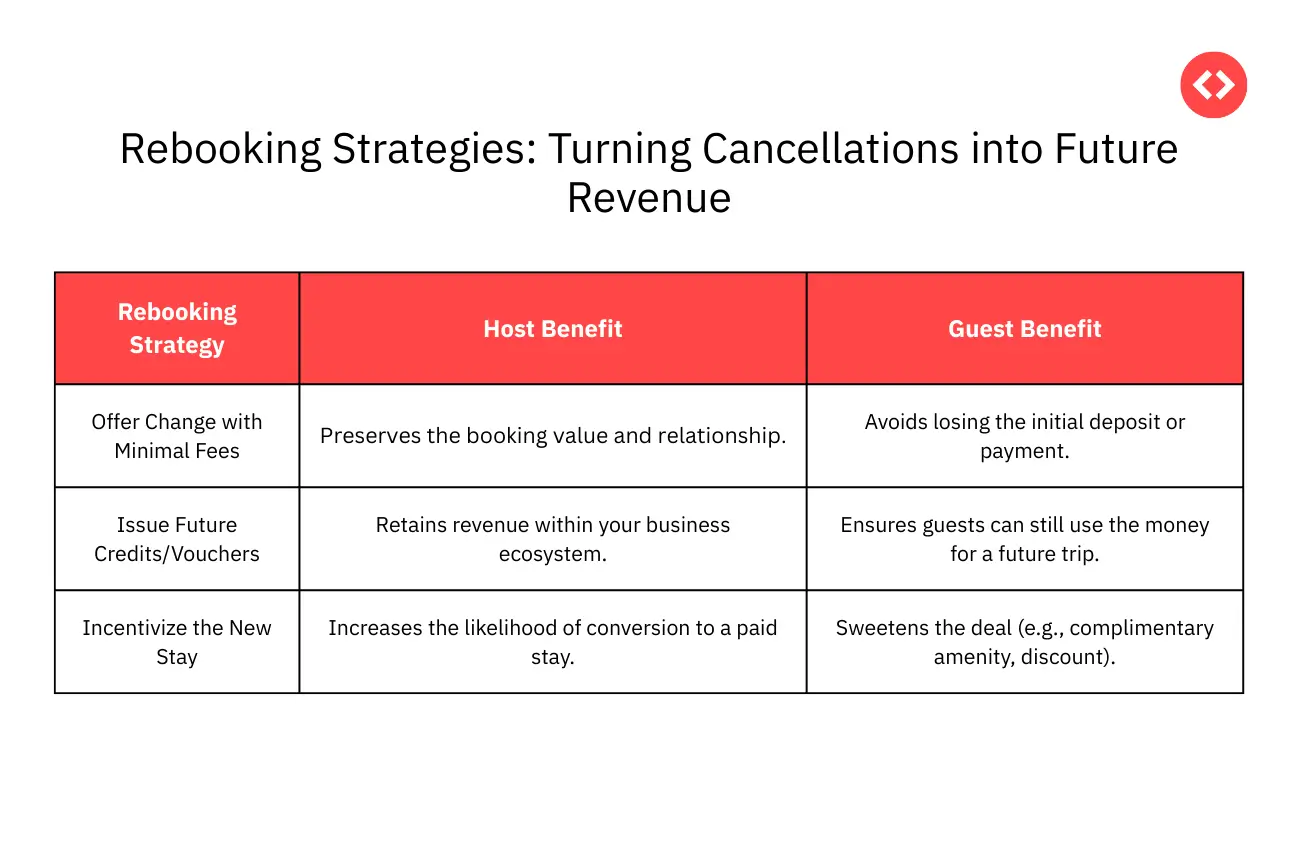
1. Implement Flexible Rebooking Options to Retain Guests
The goal is to avoid an outright refund by salvaging the reservation. Flexibility is key to guest loyalty and retention.
2. Use Dynamic Pricing to Optimize Rates After Cancellations
A vacant night, especially a last-minute one, must be addressed instantly. This is where dynamic pricing for short-term rentals acts as your revenue safety net.
When a cancellation hits your Property Management System (PMS), a smart pricing tool can immediately take over:
- Automated Rate Adjustment: The tool automatically adjusts the nightly rate for newly available dates based on factors such as remaining lead time, market demand, and local events.
- Last-Minute Promotions: For urgent, last-minute gaps, the tool can automatically apply an aggressive last-minute discount to drive bookings and optimize RevPAR.
- Instant Channel Sync: The price update is instantly pushed across all connected channels (Airbnb, Vrbo, your direct site) to eliminate the risk of offering an uncompetitive or too-low rate.
You can manage your real-time pricing strategy for late-breaking cancellations using PriceLabs’ Dynamic Pricing engine.
The PriceLabs Advantage: Stop Losing Revenue to Cancellations
Leverage Dynamic Pricing and Real-Time Data to Recover Bookings Instantly, Maximize Occupancy, and Protect Your Bottom Line.
Start Your Free Trial Now3. Leverage Technology and Integrations for Real-Time Management
In the highly competitive STR market, speed is everything. Seamless integration between your tech stack is non-negotiable for effective cancellation policy management.
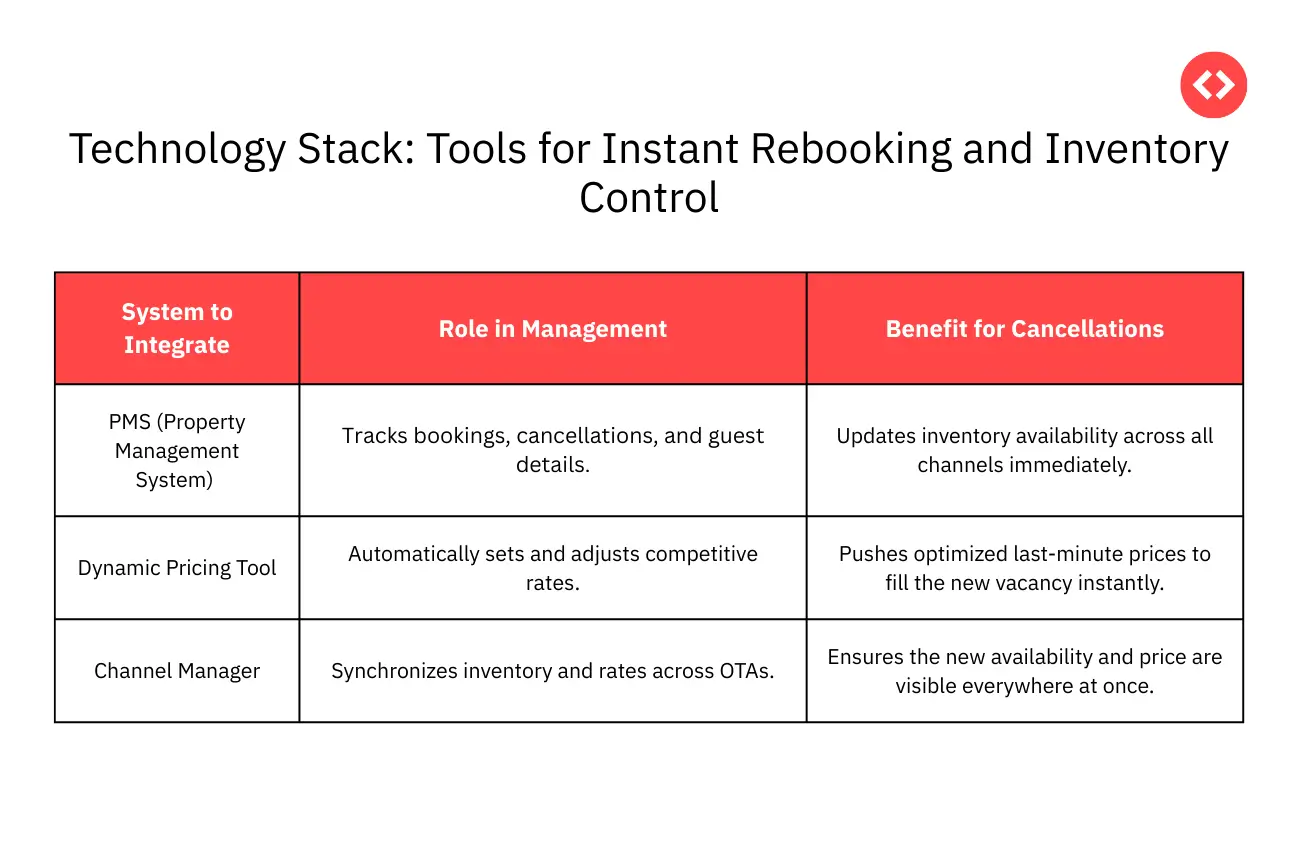
This synchronization is crucial for reducing the risk of missed bookings on newly available nights. Revenue management software can push new availability and optimized rates instantly.
4. Enhance Guest Communication to Reduce Cancellation Rates
Proactive and transparent communication is an effective way to increase guest commitment and reduce the likelihood of a cancellation.
- Pre-Arrival Commitment: Send personalized confirmation emails and pre-arrival reminders with local tips and clear check-in instructions. This helps cement the guest’s mental commitment to the stay.
- Automated Policy Clarification: Use automated messaging tools to deliver easy-to-understand cancellation and rebooking policies right after a reservation is made.
- Special Offers: Include special offers for rebooked or future stays to encourage retention rather than outright refunds, gently.
5. Establish Clear and Balanced Cancellation Policies
A sound cancellation policy must be fair to both the guest and your business. It outlines when a guest can modify a reservation, what fees apply, and the deadline for changes.
- Tiers of Policy: Offer a mix of flexible (higher price, easier refund) and stricter (lower price, non-refundable) rates to appeal to different traveler segments.
- Transparency is Key: Clearly communicate cancellation fees and deadlines at the point of booking. Analyzing competitors’ policies in your market is vital to striking the right balance.
You can compare the average cancellation policies and cleaning fees in your market against the percentage of bookings for each using the PriceLabs Market Dashboard.

6. Apply Smart Overbooking and Demand Forecasting Strategies
This is an advanced tactic for the portfolio manager: overbooking. Defined as accepting more reservations than available units, overbooking is a calculated strategy to maintain high occupancy based on anticipated cancellations/no-shows.
- Data-Driven Limits: Use demand forecasting—historical data on occupancy, seasonality, and guest behavior—to set a safe margin for overbooking.
- Analyze Past Behavior: Your past cancellation data is your best predictor. If your historical cancellation rate is consistently low, you may set a tight margin.
- Fall-back Options: Always have compensation ready (e.g., a free upgrade at a sister property or a future discount) in case the forecasted cancellations don’t materialize.
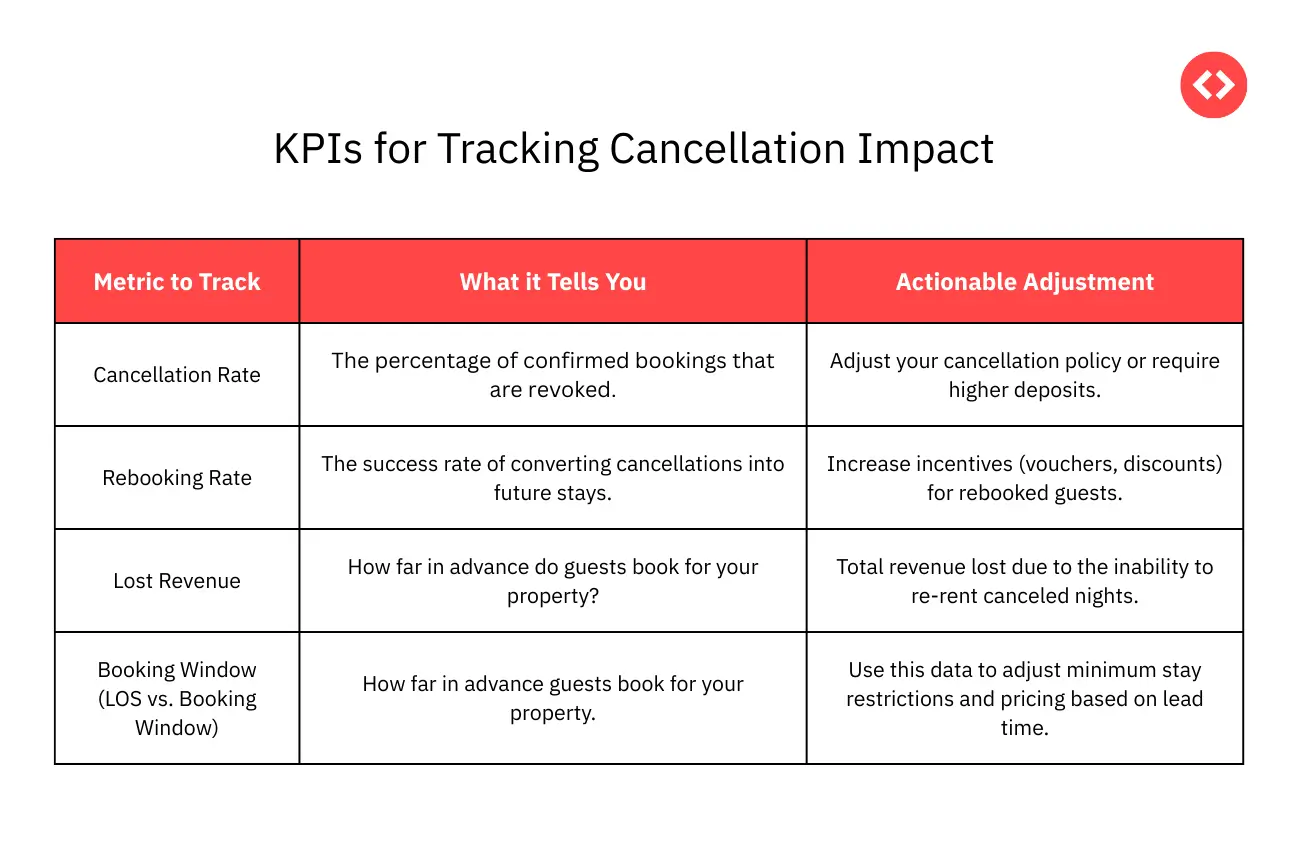
7. Continuously Analyze Performance and Adjust Strategies
The market is an ever-moving target. Revenue optimization is an ongoing process that demands constant review of your key performance metrics.
The PriceLabs Connection: Your AI-Powered Revenue Safety Net
Effective revenue management software is the difference between a property manager who manages revenue and one who maximizes it. PriceLabs helps you to manage unpredictable cancellations through automation and data intelligence.
- Seamless Integration: Our system integrates instantly with over 150 PMS and channel managers, ensuring zero delay between a cancellation and the resulting pricing update.
- Orphan Gap Management: PriceLabs automatically recognizes and aggressively prices single-night or short gaps left by cancellations, often through default or customizable rules, increasing your chances of conversion and filling the space at the optimal rate.
- Customizable Last-Minute Strategy: You can set dynamic, occupancy-based adjustments to aggressively drop prices as a canceled date approaches, a crucial tactic for recouping lost RevPAR.
By leveraging PriceLabs, you convert an unpredictable business cost (cancellation) into a controlled, manageable event that your pricing system is already optimized to recover.
Final Thoughts: Adaptability is the Key to Revenue Recovery
Cancellations and rebookings are an inevitable part of the STR industry. But they do not have to result in lost revenue. By adopting dynamic pricing tools, establishing clear policies, and prioritizing guest retention through flexibility, you gain full control over your revenue recovery. Data is your greatest asset; use it to forecast, adapt, and ensure that every vacant night is priced to convert, allowing you to sustain and grow your business even in the face of unexpected changes.
Frequently Asked Questions (FAQs)
What cancellation policies protect revenue without deterring bookings?
Policies that balance reasonable cancellation windows and moderate fees protect revenue while ensuring guests feel confident. Providing both flexible cancellation policy and non-refundable rate options encourages more conversions from a wider range of guests.
How can dynamic pricing help recover revenue from canceled stays?
Dynamic pricing tools automatically adjust nightly rates for newly opened dates. They often apply time-sensitive, last-minute deals to fill gaps from cancellations, improving occupancy and recouping potential revenue that might otherwise be lost.
When is it best to offer vouchers or credits instead of refunds?
It’s most effective to offer vouchers or credits when a guest is willing to rebook, as this retains the guest relationship and preserves potential revenue for your property over time, allowing you to book that revenue when they finally stay.
How can deposits and prepayments reduce last-minute cancellations?
Requiring a deposit or partial prepayment at the time of booking increases the guest’s financial commitment to the reservation. This significantly reduces the likelihood that they will cancel at the last minute without a compelling reason, thereby minimizing no-shows.