
Table of Contents
Updated : Mar 30, 2026
Running a vacation rental is exciting — until you realize that listing your property and hoping for the best is a surefire way to leave money on the table. The hosts and property managers who consistently earn more aren’t necessarily the ones with the nicest properties. They’re the ones who understand vacation rental revenue management.
This guide is your complete playbook for vacation rental revenue management. Whether you’re a first-time Airbnb host with a single property or a property manager overseeing a portfolio of 50+ units, you’ll find actionable strategies here — from the fundamentals of pricing and demand forecasting to advanced tools and operational frameworks used by top-performing operators.
By the end, you’ll know how to set smarter prices, track the metrics that actually matter, avoid the most costly mistakes, and build a revenue strategy that grows with your business.
What Is Vacation Rental Revenue Management?
Revenue management is the practice of selling the right unit to the right guest at the right price at the right time. It’s a discipline borrowed from the airline and hotel industry, but it’s become just as critical — if not more so — in the short-term rental world.
For vacation rentals, revenue management means making data-driven decisions about your nightly rates, minimum stay requirements, availability windows, and channel mix so that you maximize the total revenue your property generates over time — not just on any given night.
It’s worth distinguishing between a few terms that are often used interchangeably but mean different things:
Pricing is the act of setting your nightly rate. It’s one component of revenue management.
Revenue management is the broader strategy — it includes pricing, but also occupancy goals, booking window decisions, stay restrictions, and market positioning.
Revenue optimization is the ongoing process of improving all of those levers continuously based on performance data.
The goal of vacation rental revenue management is not to maximize occupancy. It’s to maximize revenue per available night — which sometimes means leaving a night unbooked rather than filling it at a price that undercuts your value.
Key Insight: A fully booked calendar at low rates is not the same as a profitable calendar. Revenue management teaches you to think in terms of total revenue — and total profit — not just occupancy percentages.
Put Your Revenue Management on Autopilot
Why guess your nightly rates when you can use real-time market data? PriceLabs analyzes local demand, events, and competitor pricing so you’re always priced to win.
Start Your Free Trial NowHow Revenue Management Works in Different Segments
Revenue management isn’t one-size-fits-all. The strategies that work for a 200-room hotel look very different from what a single Airbnb host needs — and both differ from the approach a mid-term rental operator takes. Understanding how revenue management applies to your specific segment is the starting point for building a strategy that actually works for your business.
Hotels and Small Hotels
Revenue management in hotels is a well-established discipline with decades of frameworks, tools, and best practices behind it. Large hotel chains have dedicated revenue managers — sometimes entire teams — whose sole job is to optimize pricing, occupancy, and channel mix across hundreds of rooms.
But hotel revenue management isn’t just for big brands. Small and independent hotels benefit just as much from the discipline — often more so, because they lack the brand recognition and loyalty programs that drive automatic demand for larger chains. For small hotel owners, mastering key metrics in hotel revenue management like ADR and RevPAR optimization, understanding your comp set, and building a seasonal revenue management strategy can be the difference between a thriving property and one that’s perpetually discounting to fill rooms.
The core levers for hotel revenue management include room-type pricing, length-of-stay controls, overbooking strategy, group vs. transient mix, and distribution channel management across OTAs and direct bookings. Getting these right — even at a small property — compounds into significant revenue gains over time.
Vacation Rentals and Airbnb
Vacation rental revenue management shares many principles with hotels but operates in a fundamentally different environment. You’re typically managing individual units rather than room inventory, your listing’s ranking on platforms like Airbnb and Vrbo directly affects your visibility, and guest reviews carry enormous weight in both conversion and pricing power.
For Airbnb hosts specifically, Airbnb revenue management strategies means understanding how the platform’s search algorithm works, how your pricing affects your listing’s visibility, and how to use dynamic pricing tools like PriceLabs to stay competitive without constantly undercutting yourself. It also means knowing when to push rates — during local events, holiday weekends, and peak season — and when to be flexible to maintain occupancy during slower periods.
Whether you’re managing one property or building a portfolio, a strong Airbnb revenue management strategy is built on the same pillars: the right base price, smart minimum stay rules, comp set awareness, and data-driven adjustments over time.
Mid-Term and Monthly Rentals
Mid-term rentals — typically stays of 30 days or longer — operate by a different set of revenue management rules entirely. The goal shifts from maximizing nightly rate to securing stable, low-turnover occupancy that reduces operational costs and provides predictable rental income that you can analyze using a mid-term rental calculator.
Mid-term rental guests are often traveling nurses, remote workers, corporate relocators, or people in life transitions — all of whom prioritize a furnished, move-in-ready space over the lowest possible price. This means mid-term revenue management is less about dynamic nightly pricing and more about positioning, lease terms, furnished rental presentation, and targeting the right platforms (like Furnished Finder or Vrbo monthly rentals).
For hosts who operate in markets with strong short-term seasonality, mid-term rentals can be a powerful strategy for filling slow months that would otherwise sit empty — often at margins that rival or exceed what sporadic short-term bookings would generate.
Each segment has its own demand drivers, guest expectations, and operational realities — but the underlying goal is the same: maximize the revenue your property generates per available night, month, or year.
Why Revenue Management Matters More Than Ever
The short-term rental market has matured significantly over the last decade. In the early days of Airbnb, you could list a clean property at a reasonable price and bookings would come. That era is over.
Today’s landscape looks very different. Supply is at an all-time high in most markets, with millions of listings competing for the same travelers. Guests are more price-sensitive and comparison-savvy, opening multiple tabs and evaluating dozens of properties before booking. Platforms like Airbnb and Vrbo use complex ranking algorithms that reward properties with competitive pricing and strong conversion rates. Economic uncertainty and shifting travel patterns have made demand less predictable. And operating costs — cleaning, supplies, maintenance, platform fees — are rising, which means margins are thinner.
In this environment, hosts who rely on static pricing or gut-feel decisions consistently underperform. Revenue management gives you the tools to stay competitive, adapt to demand changes in real time, and protect your income even during slow seasons.
Read More: Revenue Management Strategies During Economic Slowdown
The Key Metrics Every Vacation Rental Host Should Track
You can’t manage what you don’t measure. Before you can build a revenue strategy, you need to understand the key revenue management metrics that reflect your property’s financial performance.
RevPAR — Revenue Per Available Night
RevPAR is the single most important metric in revenue management. It tells you how much revenue your property generates per available night, accounting for both the rate you charge and how often you’re actually booked.
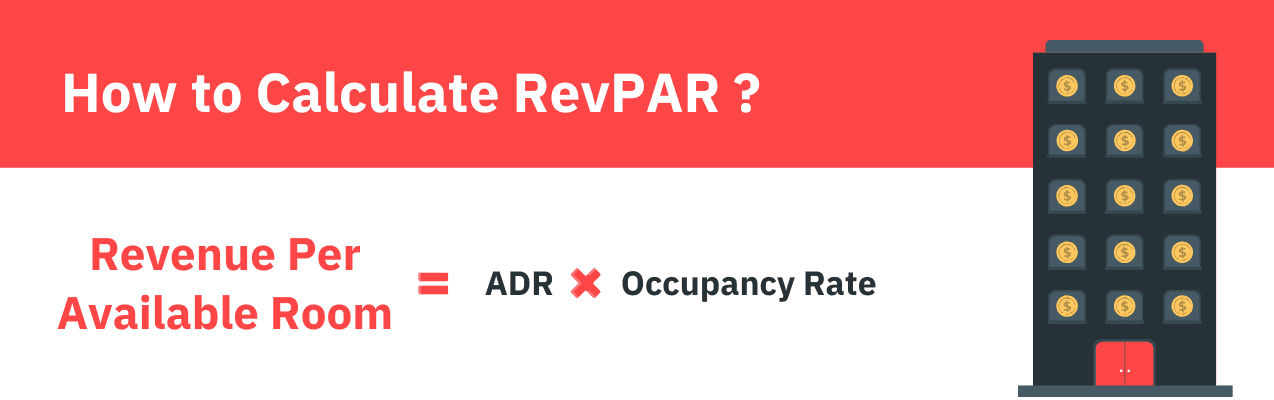
For example, if your property earns $5,000 in a month with 30 available nights, your RevPAR is $166.67 — regardless of whether you were booked 15 nights at $333 or 25 nights at $200.
Two properties with identical RevPAR can have completely different occupancy and ADR profiles. Understanding your RevPAR in the context of your market is what separates strategic operators from guesswork.
ADR — Average Daily Rate
ADR measures the average rate you collect per booked night. It’s calculated by dividing your total rental revenue by the number of booked nights. ADR is a useful measure of your pricing power in the market. A rising ADR over time suggests you’re successfully positioning your property at a higher price point — though you always need to watch occupancy alongside it.

Occupancy Rate
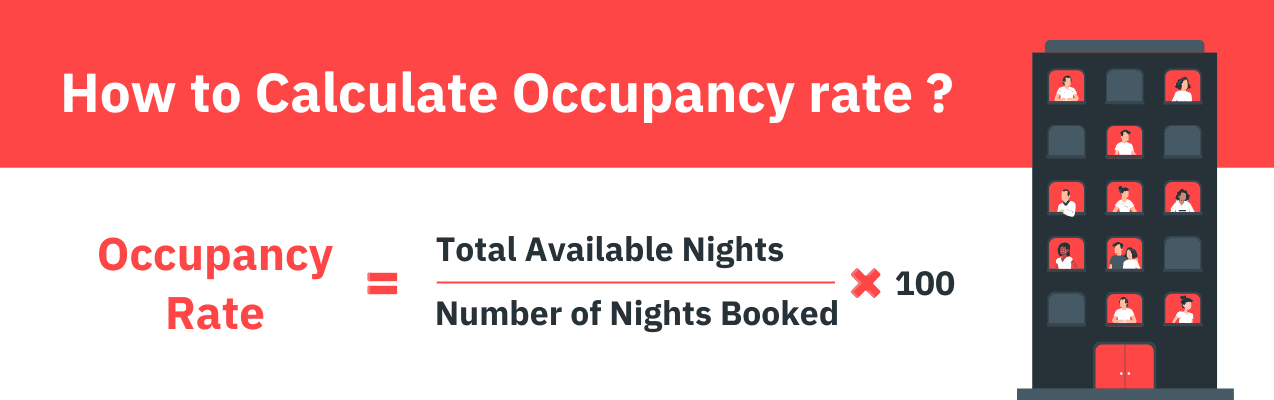
Your occupancy rate is the percentage of available nights that are actually booked. Occupancy alone is a vanity metric if tracked in isolation. High occupancy at low rates is often worse than moderate occupancy at strong rates. Always look at occupancy in conjunction with ADR and RevPAR.
Other Metrics Worth Tracking
Booking Window — How far in advance guests book. Helps you decide when to adjust prices and how aggressively to discount as dates approach.
Average Length of Stay (ALOS) — How many nights per booking on average. Longer stays reduce cleaning and turnover costs per booking.
Cleaning Fee to Rate Ratio — Your cleaning fee as a percentage of the nightly rate. High ratios deter short stays and can hurt conversion.
Channel Mix — The percentage of bookings from each OTA. Higher direct bookings mean lower commission costs and stronger guest relationships.
Review Score — Guest satisfaction average. Directly affects platform ranking and conversion rate.
Revenue per Property — Total revenue per listing over a period. Essential for portfolio-level performance management.
Put Your Revenue Management on Autopilot
Why guess your nightly rates when you can use real-time market data? PriceLabs analyzes local demand, events, and competitor pricing so you’re always priced to win.
Start Your Free Trial NowCore Revenue Management Strategies for Vacation Rentals
Dynamic Pricing: The Foundation
Dynamic pricing means adjusting your nightly rates in real time based on supply and demand signals — rather than setting a flat rate or a simple weekend/weekday split and leaving it alone. It is a very essential step of any revenue management strategy.
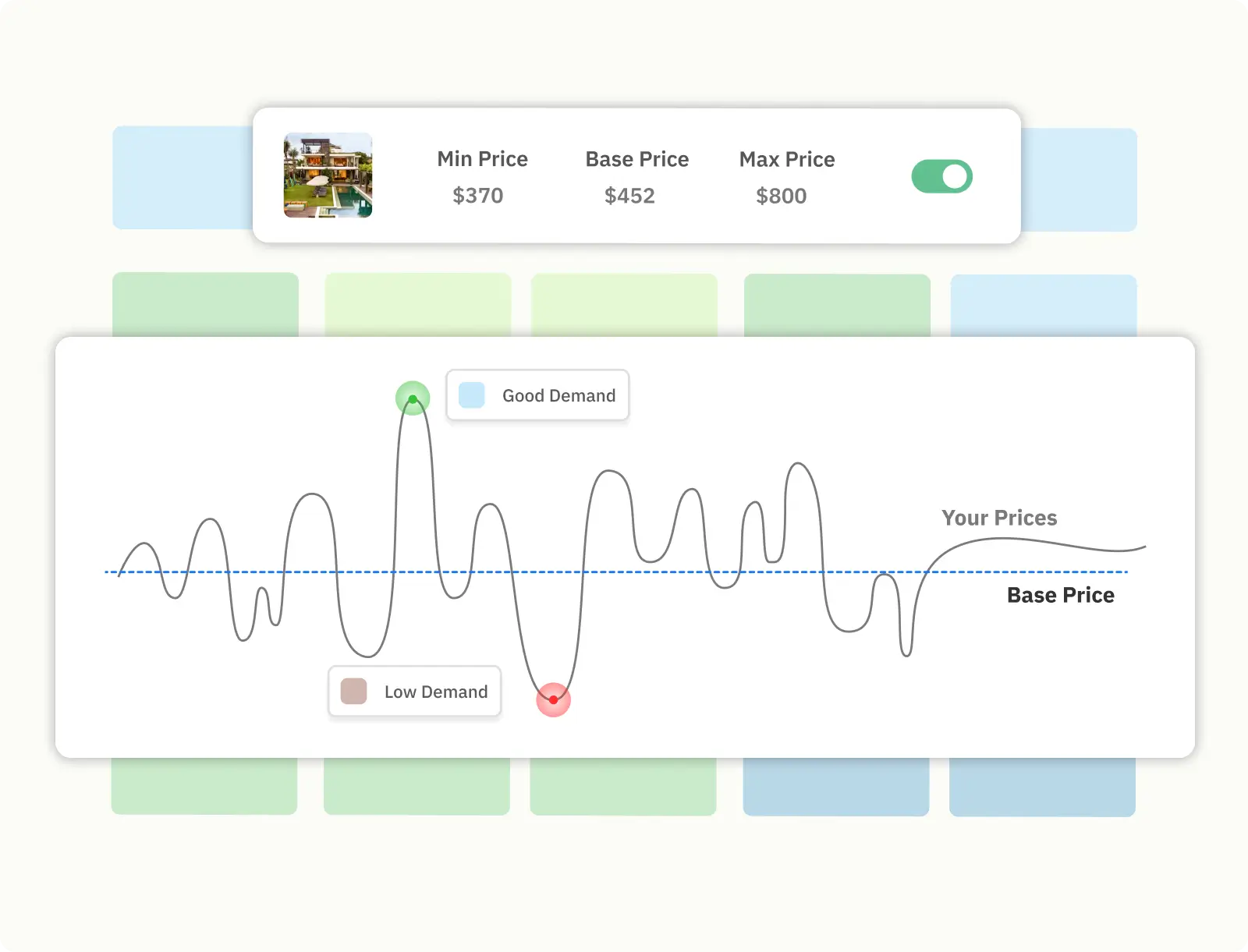
The core idea is simple: when demand is high, prices go up. When demand is low, prices come down. But the execution requires understanding dozens of variables simultaneously: upcoming local events (concerts, sports, festivals, conferences), seasonal demand patterns in your market, day-of-week demand patterns (Fridays command more than Tuesdays in most leisure markets), how far in advance guests are searching, your competitors’ current pricing, and how many nights remain unsold as a date approaches.
Most experienced property managers use a revenue management platform like PriceLabs to automate dynamic pricing. These tools pull in real-time market data and automatically adjust your rates based on pre-set rules and algorithmic recommendations — so you’re not manually repricing every day.
Setting Your Base Price Correctly
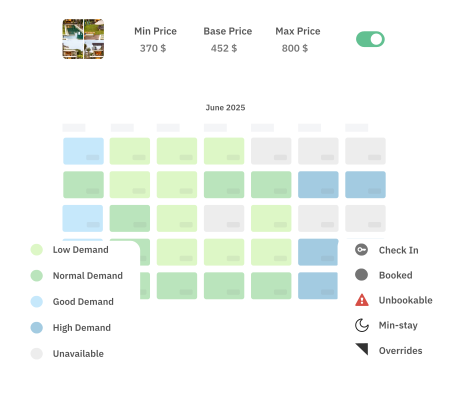
Dynamic pricing tools work on top of a base price — your starting point before adjustments. If your base price is set too low, even aggressive demand-based markups may not get you to fair market value. If it’s too high, your occupancy will suffer.
To find the right base price: research comparable listings in your market (similar size, amenities, location, and quality), use market data tools like PriceLabs Base Price Help Tool to understand what similar properties are actually earning (not just listing for), factor in your operating costs and desired margin, and start conservative. If you fill up too fast, your base is too low. If you’re consistently sitting empty, it may be too high.
Minimum Stay Restrictions: A Powerful Revenue Lever
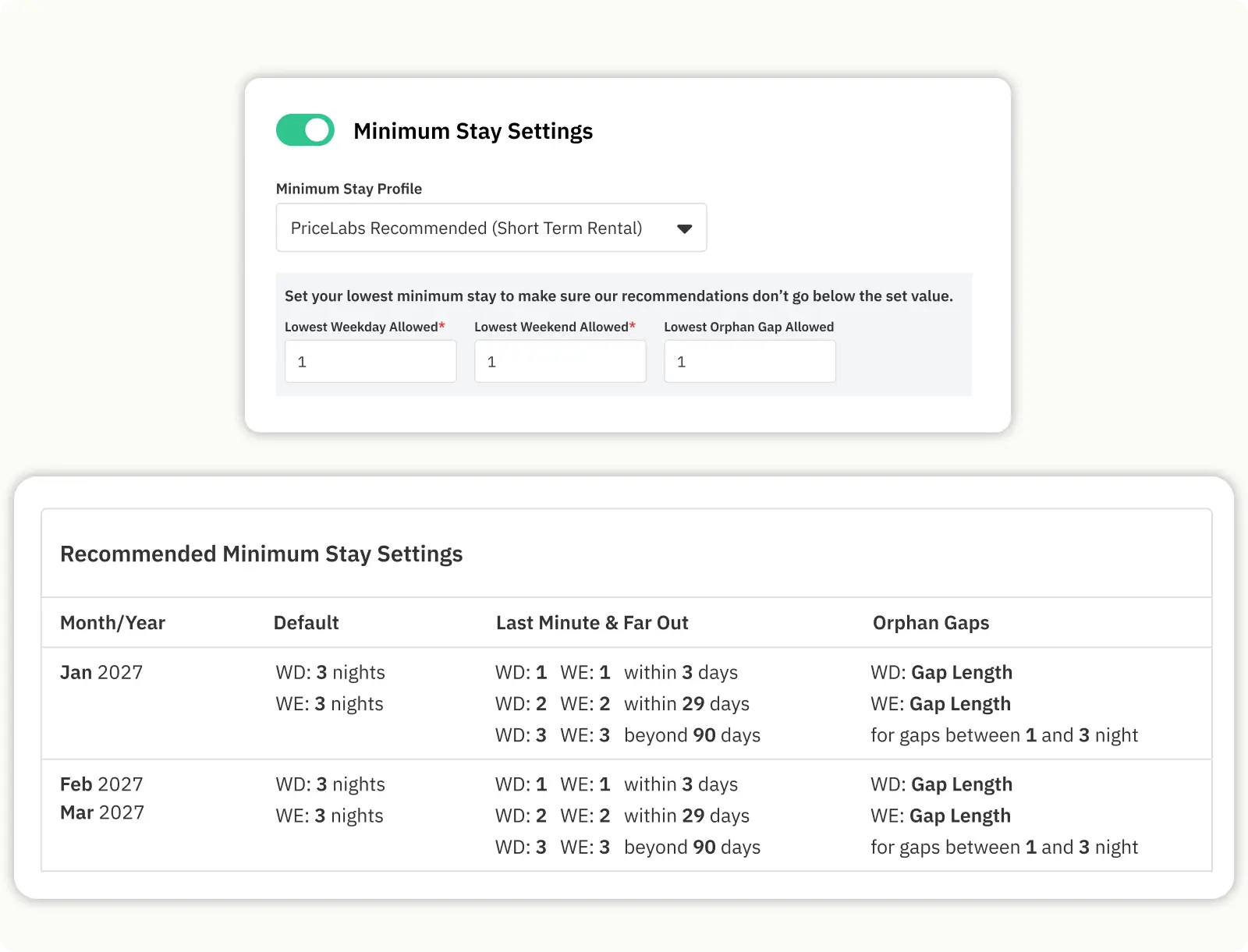
Minimum stay restrictions are one of the most underutilized tools in vacation rental revenue management. By requiring guests to book a minimum number of nights, you reduce cleaning and turnover costs per booking, protect against one-night bookings that take up high-demand slots, and encourage longer, more profitable stays.
However, minimum stay requirements need to be applied strategically. A blanket 3-night minimum sounds good until you realize it’s causing you to lose bookings during your slow season — when a 1-night booking is better than an empty night.
Best practice: use dynamic minimum stays. Require 3–7 nights during peak periods and holidays. Drop to 1–2 nights during slower periods or as dates approach without bookings.
Booking Window Management and Last-Minute Pricing
Your booking window — how far in advance guests book — tells you a lot about demand for your property and your market. Leisure vacation markets often see bookings 60–120 days out. Urban markets with business travelers may see shorter windows of 7–30 days.
Understanding your booking window lets you make smarter decisions. If a date is 90 days out and still wide open, you may need to lower prices or increase marketing. If a weekend 3 weeks out is already 80% booked across your comp set, you can hold or raise your rate. As dates get closer, apply last-minute discounts carefully — you don’t want to train guests to always wait for a deal.
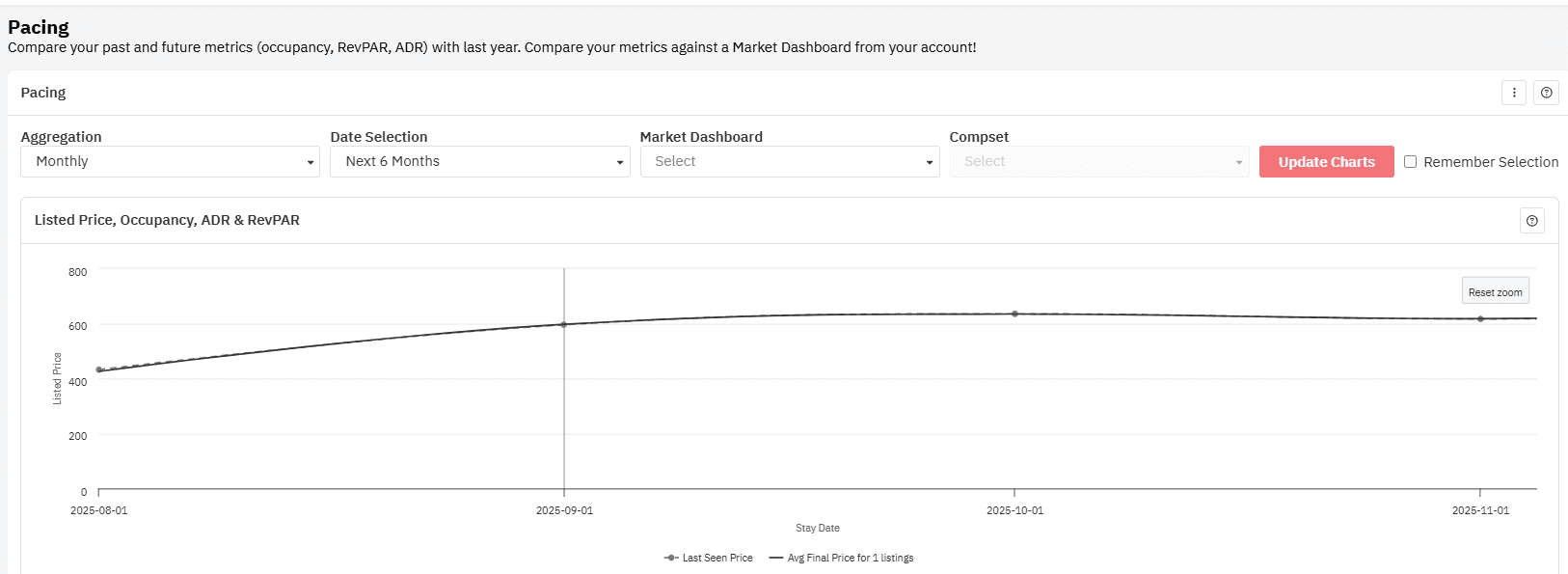
Pro Tip: Track your “pacing and booking curves” — how your current bookings compare to the same point last year or to your market average. If you’re behind pace, act early. If you’re ahead, consider holding rates or adding a minimum stay restriction.
Orphan Gap Management
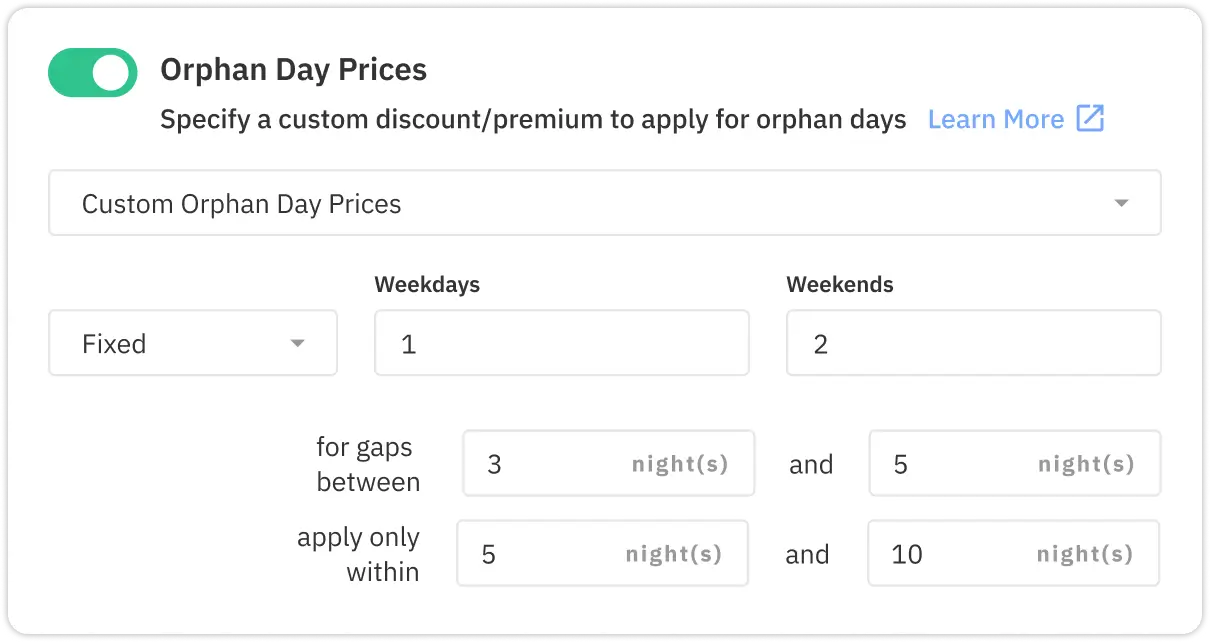
An orphan gap is a short unbooked period — usually 1–3 nights — sandwiched between two existing reservations. These gaps often go unbooked because they don’t fit guests’ standard stay lengths, and they silently drain your revenue over the course of a year.
Strategies to fill orphan gaps: temporarily lower the minimum stay requirement for that specific window, reduce the price for those nights to attract flexible travelers, and use gap-filling rules in your pricing tool to automatically detect and respond to these windows before they expire unfilled.
Read More: 2026 STR Revenue Management Strategy: Data-Driven Planning
Demand Forecasting: Knowing What’s Coming Before It Arrives
The best revenue managers don’t just react to demand — they anticipate it. Demand forecasting is the practice of predicting future booking activity so you can price and position your property ahead of time.
Seasonality Patterns
Every market has a seasonal demand curve — periods of high demand (summer beach season, ski season, holiday weeks) and periods of slow demand. Understanding your market’s seasonality is table stakes.
Plot your occupancy and RevPAR by week or month across multiple years. Look for patterns: which weeks always sell out? Which months are consistently slow? Are there shoulder seasons that can be unlocked with the right pricing? Once you understand your market’s seasonal patterns, you can build a pricing calendar that proactively captures value during peak periods and aggressively competes for bookings during slow ones and improves your Airbnb rental income.
Local Events and Special Demand Drivers
Local events can dramatically spike demand — and if you’re not paying attention, you’ll miss the pricing opportunity entirely. A major music festival, a college football game, a marathon, or a large corporate conference can send demand through the roof for specific dates.
Build a habit of tracking your local events calendar 12 months in advance, monitoring hotel rates in your area as a proxy for demand, and using your pricing tool’s event detection features to flag high-demand dates automatically.
Market-Level Demand Data
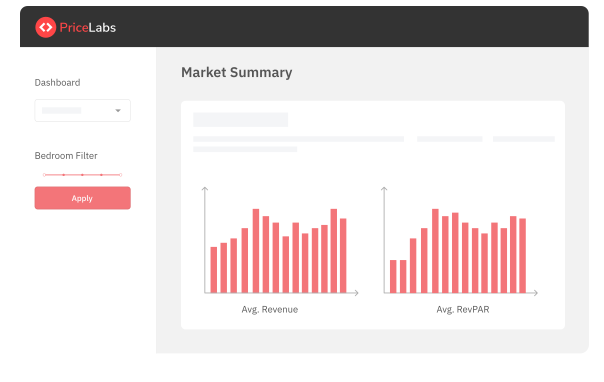
Tools like PriceLabs’ Market Dashboard give you visibility into what’s happening across your entire market — not just your own property. You can see average occupancy rates for comparable properties, how rates are trending in your comp set, booking pace for future dates, and how your performance benchmarks against the market. This kind of market intelligence is invaluable for catching demand signals you might otherwise miss.
Put Your Revenue Management on Autopilot
Why guess your nightly rates when you can use real-time market data? PriceLabs analyzes local demand, events, and competitor pricing so you’re always priced to win.
Start Your Free Trial NowComp Set Analysis: Know Your Competition
A comp set (competitive set) is the group of listings most similar to yours that you’re competing against for the same guests. Defining and monitoring your comp set is a critical discipline in revenue management.
How to Define Your Comp Set
Your comp set should include properties that are in the same geographic area, similar in size (same or close number of bedrooms), similar in quality tier (compare 4.8-star properties to other 4.8-star properties, not to budget listings), and targeting the same type of traveler. Your comp set doesn’t need to be large — 5 to 10 closely matched properties is usually enough to get meaningful data.
What to Do with Comp Set Data
Once you’ve identified your comp set, monitor it regularly. Are your prices consistently above, below, or in line with comps? Being 10–15% below similar properties suggests you’re underpriced. Are comps selling out on weekends while you’re sitting empty? That’s a sign you may need to sharpen your listing, not just your price. When comps raise prices for specific dates — events, holidays — follow suit.
Important Note: Don’t price-match blindly. A property with 47 reviews and a 4.5 rating may need to price below a comparable property with 300 reviews and a 4.9 rating. Your pricing power is partly a function of your social proof.
Channel Management and Distribution Strategy
Where your property is listed matters as much as how it’s priced. Channel management is the practice of strategically distributing your listing across platforms to maximize visibility and revenue.
Choosing Your Channels
The major OTAs for vacation rentals include Airbnb, Vrbo, Booking.com, and direct booking via your own website. Each has different fee structures, guest demographics, and booking windows.
Airbnb is strongest for domestic leisure travel and unique or urban properties, with a host fee typically around 3%. Vrbo tends to attract families and longer stays, often commanding higher-value bookings, with host fees starting around 5%. Booking.com offers strong global and urban reach with commission-based pricing typically 15–20%. Direct booking eliminates commissions entirely but requires marketing investment — it’s best for building long-term guest relationships and repeat bookings.
Building a Direct Booking Strategy
Building a direct booking strategy — even a simple website with a booking engine — is one of the highest-ROI investments a property manager can make. Every direct booking eliminates OTA commissions and builds a guest relationship you own. You can offer returning guests exclusive rates, perks, or loyalty incentives that OTAs can’t match.
The Revenue Impact of Reviews
Review scores are not just a quality metric — they’re a revenue driver. Properties with higher ratings rank better on OTA platforms, convert at higher rates, and can command premium pricing. A 0.2-point drop in review score can meaningfully reduce your ranking and booking volume. Conversely, a property that systematically improves its rating from 4.6 to 4.9 will typically see both a boost in occupancy and the ability to raise prices. Revenue management and guest experience management are inseparable.
Seasonal Strategy: Maximizing Peak Seasons and Surviving Slow Ones
Peak Season: Don’t Leave Money on the Table
Peak season is when most hosts make the majority of their annual revenue — but it’s also when the most money gets left on the table through underpricing.
During peak periods, raise your minimum stay requirements — a 3–7 night minimum prevents guests from cherry-picking the most valuable nights and leaving gaps around them. Increase prices earlier than you think you should; high-demand dates can often be priced at 2–3x your base rate without hurting occupancy. Watch your booking pace closely: if peak weeks sell out 90+ days in advance consistently, you’re underpriced. And reduce or eliminate discounts — weekly discounts and last-minute deals should be paused when demand is strong.
Slow Season: Be Strategic, Not Desperate
Every market has a slow season, and the instinct to slash prices aggressively is understandable — but often counterproductive. Deep discounts can attract problematic guests, erode your perceived value, and train your market to expect lower rates permanently.
Instead, lower minimum stays to 1–2 nights to capture weekend travelers and shorter getaways. Target different traveler segments — slow seasons for leisure travelers are often business traveler seasons in urban markets. Run modest promotions (10–20% discounts) for early bookers or extended stays rather than blanket price cuts. And consider mid-term rentals (30+ day stays) to fill slow months with stable occupancy. Many markets see strong demand for furnished monthly rentals from remote workers, traveling nurses, and corporate relocators.
Pro Tip: A 60-day corporate rental at a modest discount is often more profitable than two months of spotty short-term bookings — and far less operational work.
Revenue Management for Portfolio Operators
If you manage multiple properties, revenue management becomes both more powerful and more complex. You’re not just optimizing one listing — you’re optimizing an entire portfolio.
Portfolio-Level Metrics
At the portfolio level, track total portfolio revenue and month-over-month trends, RevPAR by property (to identify top and bottom performers), occupancy and ADR benchmarks across properties, and revenue per property manager or operational unit. Comparing performance across your portfolio reveals which properties are underperforming relative to their market potential — and gives you a prioritization framework for where to focus improvement efforts.
Avoiding Cannibalization
When you manage multiple properties in the same market, be careful not to cannibalize your own bookings by competing against yourself. Differentiate your listings by price point, minimum stay, target guest type, or unique amenities so they serve different demand segments rather than competing head-to-head.
Automation at Scale
Portfolio operators simply cannot manually manage pricing for 20, 50, or 100 properties. Revenue management software becomes essential — not just helpful — at this scale. The right platform allows you to set rules once and apply them across your portfolio, group properties by market or type for batch pricing updates, monitor performance dashboards across all properties in a single view, and receive alerts when properties are underperforming or have pricing anomalies.
Put Your Revenue Management on Autopilot
Why guess your nightly rates when you can use real-time market data? PriceLabs analyzes local demand, events, and competitor pricing so you’re always priced to win.
Start Your Free Trial NowChoosing and Using Revenue Management Software
Revenue management platforms like PriceLabs bring enterprise-grade tools to operators of all sizes — automating the complex, data-intensive work that would otherwise require a full-time revenue analyst.
What to Look for in a Platform
When evaluating a revenue management platform, look for real-time market data (the tool should pull live comp set pricing and availability, not rely on historical averages alone), customizable rules (you should be able to set your own floor prices, ceiling prices, minimum stays, and event-based adjustments), booking window intelligence, seamless channel integration with Airbnb, Vrbo, and your property management system, and clear performance reporting dashboards.
The Role of AI and Automation
Modern revenue management platforms use machine learning and AI to detect demand signals that humans would miss — analyzing millions of data points across your market to surface pricing recommendations in real time. AI-powered tools can detect local events and demand spikes weeks before they’re widely known, learn from your property’s own booking history to build property-specific demand models, automatically adjust prices as dates approach based on fill rate and remaining availability, and identify sudden surges in market searches and respond in minutes.
That said, AI is a tool, not a replacement for strategy. The best operators use AI-powered recommendations as a starting point, then layer in their own market knowledge, property-specific rules, and strategic judgment.
Common Revenue Management Mistakes — and How to Fix Them
Mistake 1: Setting and forgetting your prices. Static pricing is one of the most expensive mistakes a host can make. Markets change constantly. Fix: use dynamic pricing software or commit to reviewing and adjusting your rates at least weekly.
Mistake 2: Optimizing for occupancy instead of revenue. A 95% occupancy rate sounds impressive until you realize your competitors earned 30% more revenue with 75% occupancy by pricing correctly. Fix: track RevPAR, not just occupancy. Set a revenue goal, not an occupancy goal.
Mistake 3: Ignoring the booking window. Many hosts panic when they see empty dates two weeks out and slash prices dramatically — but sometimes those dates were always going to fill in the last week. Fix: learn your property’s typical booking window and price proactively based on that timeline.
Mistake 4: Using the same strategy for every season. What works in July won’t work in January. Fix: build a seasonal pricing strategy at the start of each year, with different rules for peak, shoulder, and slow periods.
Mistake 5: Underpricing out of fear. New hosts often price low out of fear of empty nights. But underpricing signals low value and attracts guests who are primarily motivated by price. Fix: price to market, not below it. Monitor booking pace and adjust if needed.
Mistake 6: Not tracking performance. You can’t improve what you don’t measure. Fix: review your ADR, RevPAR, and occupancy at least monthly and track them over time.
How to Build Your Vacation Rental Revenue Strategy: A Step-by-Step Framework
Step 1: Define your baseline and goals. Document your current performance — ADR, occupancy, RevPAR, and total revenue over the past 12 months. Set specific targets for the next 12 months. Without a baseline, you can’t measure improvement.
Step 2: Understand your market. Use market data tools to understand your market’s seasonal demand curve, typical booking windows, comp set pricing, and any major events on the calendar. Build a demand calendar for the year ahead.
Step 3: Define your comp set. Identify 5–10 comparable listings and commit to monitoring them regularly. Know their prices, occupancy patterns, and guest ratings.
Step 4: Build your pricing strategy. Set your base price, establish seasonal pricing tiers, configure minimum stay rules for different periods, and set floor and ceiling prices. If you’re using a revenue management tool, configure your rules to automate these decisions.
Step 5: Optimize your listing for conversion. Revenue management only works if guests actually book. Ensure your photos are professional, your description is compelling, your amenities are competitive, and your response rate is high. A 4.9-star listing with fast responses converts at a higher rate at higher prices than a mediocre listing at lower prices.
Step 6: Monitor, report, and iterate. Review your performance monthly with revenue reports. Compare your RevPAR to your market average. Identify which periods over- or under-performed and understand why. Use those insights to refine your strategy for the next cycle.
The Bottom Line: Revenue management is not a one-time setup. It’s an ongoing discipline. The operators who win are the ones who treat it as a continuous practice — always learning, always adjusting, always improving.
If you’re managing more than one or two properties, a dedicated revenue management platform will pay for itself many times over. And if you want to go deeper on the strategy side, a structured revenue management course designed for STR operators will accelerate your learning significantly — covering everything from pricing fundamentals to advanced portfolio strategy.
Frequently Asked Questions
What is vacation rental revenue management?
Vacation rental revenue management is the practice of maximizing the income your property generates by making data-driven decisions about pricing, availability, minimum stays, and distribution channels. It goes beyond simply setting a nightly rate — it’s a complete strategy that balances occupancy, ADR, and market positioning to improve your overall RevPAR.
How is revenue management different from dynamic pricing?
Dynamic pricing is one tool within revenue management — it refers specifically to adjusting your nightly rates based on demand signals. Revenue management is the broader discipline that includes dynamic pricing, but also covers minimum stay rules, booking window strategy, channel management, comp set analysis, and performance reporting.
What is a good RevPAR for a vacation rental?
There’s no universal benchmark since RevPAR varies significantly by market, property type, and season. What matters is how your RevPAR compares to similar properties in your market. A good starting goal is to match or exceed your comp set’s average RevPAR — and improve on it month over month.
How do I start with revenue management for my Airbnb?
Start by establishing your baseline metrics — your current ADR, occupancy rate, and RevPAR. Then research your local market and identify your comp set. Set a base price aligned with comparable listings, enable dynamic pricing through a tool like PriceLabs, and configure minimum stay rules for peak and slow periods. Review your performance monthly and adjust from there.
Do I need revenue management software for a single property?
Not necessarily — but it helps significantly even with one property. Revenue management software automates daily pricing decisions, pulls in real-time market data, and catches demand opportunities (like local events) that most hosts miss manually. For most single-property hosts, the revenue uplift far outweighs the cost of the tool.
What is the biggest revenue management mistake vacation rental hosts make?
The most common and costly pricing mistake is optimizing for occupancy instead of revenue. A fully booked calendar at low rates is not the same as a profitable calendar. Hosts who chase 100% occupancy often underprice during high-demand periods and discount too aggressively during slow ones — both of which reduce total revenue.
How does seasonality affect vacation rental revenue management?
Vacation Rental Seasonality is one of the most important variables in vacation rental revenue management. Every market has peak periods (when demand is high and prices should rise) and slow periods (when strategy shifts toward filling nights at competitive rates or attracting longer-stay guests). Understanding your market’s seasonal demand curve lets you price proactively rather than reactively.
What is a comp set in vacation rental revenue management?
A comp set — short for competitive set — is the group of listings most similar to yours that you’re directly competing against for the same guests. It typically includes 5–10 properties with similar size, location, quality, and guest type. Monitoring your comp set helps you understand whether you’re priced competitively and spot demand trends before they affect your bookings.
Can revenue management help during slow seasons?
Yes — in fact, it’s most valuable during slow seasons. A good revenue management strategy for slow periods includes lowering minimum stays to capture shorter trips, targeting different traveler segments, running selective promotions rather than blanket discounts, and considering mid-term rentals (30+ day stays) to maintain stable occupancy through off-peak months.
How many times should I update my vacation rental prices?
Ideally, your prices should update daily — or even multiple times a day for high-demand periods. This is why most serious hosts use automated dynamic pricing tools rather than manual updates. At a minimum, you should be reviewing and adjusting your pricing weekly, especially for dates in the next 30–60 days.