
Table of Contents
Updated : Apr 6, 2026
Vermont’s short-term rental market is currently a study in resilience and transformation. As we are starting 2026, understanding the latest Vermont vacation rental market trends is essential for any property manager looking to balance the state’s role as a premier four-season destination with an evolving regulatory framework. Between new state-level surcharges and town-specific caps in hubs like Stowe, property managers can no longer rely on “set it and forget it” pricing strategies.
The good news? Demand remains high. Whether it’s winter “ski-and-stay” or the legendary fall foliage season, travelers are still choosing Vermont—but they are booking differently. According to the Vermont Short-Term Rental Alliance (VTSTRA), STRs now represent roughly 65% of the state’s visitor capacity and generate over $1 billion in annual economic activity.
To thrive in this “new normal,” you need to move beyond intuition. Let’s dive into the PriceLabs data extracted from World STR Index and PriceLabs Market Dashboard to see exactly what’s happening on the ground.
Market Performance at a Glance (2024–2025)
While inventory has grown slightly, overall performance metrics show a market that is maturing and becoming more price-sensitive.
Key Performance Metrics
| Metric | 2024–25 Actuals | 2026 Pacing/Forecast | YoY Change |
| Active Listings | 12,264 | 12,431 | +1% |
| Average ADR | $261 | $271 | +4% |
| Average Occupancy | 49% | 45% | -3% |
| Average RevPAR | $128 | $126 | -2% |
What this means for property managers:
The negligible 1% growth in listings suggests that supply has hit a ceiling, largely due to the 3% state surcharge and looming local caps. While ADR has climbed to an average of $271, the -3% dip in occupancy has pulled RevPAR down to $126. You are earning more per booking, but those bookings are harder to secure.
Get the Data-Driven Edge
Want to see the specific pacing and median booked price for Vermont during high season? Use PriceLabs Market Dashboards to spot market trends before your competitors do.
Start Your Free Trial NowSeasonality & Booking Behavior: The “Last-Minute” Reality
Vermont has always been seasonal, but the booking window is shrinking. This implies that the travelers are waiting longer to pull the trigger, likely monitoring weather conditions or hunting for better deals.
- Average Booking Window: Has tightened to 28 days, down from 31 days in the previous cycle.
- Average Length of Stay (LOS): Hovering at 3.6 nights, a 4% decrease.
- 2026 Pacing Highs: February 2026 currently shows the strongest pacing with a 61% occupancy forecast, fueled by traditional ski demand.
- The “Mud Season” Lows: April and November continue to be the primary challenge for RevPAR, with occupancy pacing as low as 3% early in the window.
What this means for property managers:
With a 28-day booking window, your last-minute pricing strategy is now your primary strategy. With a shorter booking window, you need to be agile. If your calendar isn’t 50% full three weeks out from a peak winter weekend, it’s time to look at your pricing.
“Short-term rentals are economic engines in our local communities… they diversify our visitor capacity and help keep rural and seasonal economies viable.” — Julie Marks, Executive Director of VTSTRA
Data is the best defense against market volatility. Understanding that the shoulder months of April and May are seeing shorter lead times allows you to implement last-minute promotions effectively.
Navigating the Regulatory Landscape
Regulation is the “moving target” of 2026.
- The Stowe Cutoff (May 1, 2026): No new STR registrations will be accepted in residential zones after this date. Additionally, STR rights will no longer transfer upon the sale of a property unless the new owner is a primary resident.
- Taxation Complexity: Operators must now collect and remit the 9% Meals and Rooms Tax, the 3% STR surcharge, and any applicable Local Option Taxes (e.g., 1% in Stowe).
- Safety Compliance: Mandatory registration now requires a Designated Responsible Person (DRP) who can respond in person within 45 minutes of a call.
Compliance is no longer a “nice to have”—it is a business lifeline. Non-compliance risks significant fines and marketplace takedowns.
Lessons from Other Ski Markets: Yield vs. Volume
Vermont managers can learn from other major ski destinations facing supply constraints, such as Summit County, CO, and Mammoth Lakes, CA.
- Strategic Night Allocation: In markets with nightly caps, like Summit County, managers are shifting focus from volume to yield—reserving inventory for high-demand holidays where ADR is highest rather than burning nights in the shoulder season.
- The Supply Shock Advantage: In Pitkin County (Aspen) and Mammoth Lakes, strict licensing has reduced overall supply, allowing compliant managers to command premium nightly rates.
- Pacing is Power: Rebounds can happen quickly. In South Lake Tahoe, available nights rose up to 34% after restrictions eased, emphasizing the need for tools like PriceLabs dynamic pricing to avoid underpricing during sudden demand surges.
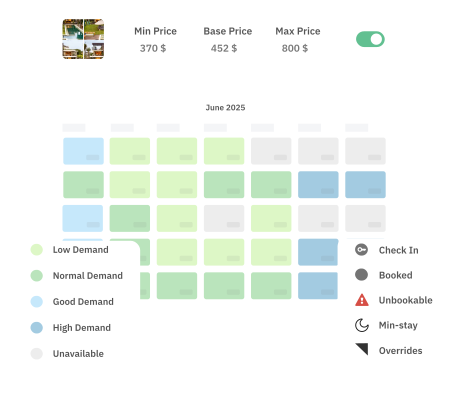
The Competitive Edge: Why Dynamic Pricing is Winning
In a market where RevPAR is tightening, the gap between “static” and “dynamic” hosts is widening. PriceLabs data shows that properties utilizing high-level dynamic pricing significantly outperform those that don’t.
Performance by Pricing Strategy (2025)
| Pricing Strategy | Average ADR | Average RevPAR |
| High Dynamic Pricing | $308 | $138 |
| No Dynamic Pricing | $222 | $97 |
| The Difference | +39% | +42% |
What this means for property managers:
Properties using dynamic pricing are capturing 42% more revenue per available room. By automatically adjusting for local events, snow forecasts, and competitor occupancy, these managers are optimizing their ADR during peak weekends and staying competitive enough to fill calendar gaps during the shoulder seasons.
Navigating the New Normal in the Green Mountain State
The 2026 outlook for Vermont’s vacation rental market is clear: the “gold rush” era of passive hosting has transitioned into a highly professionalized landscape. With supply growth flatlining at 1% and the May 2026 Stowe deadline looming, the competitive advantage now belongs to those who treat their rental as a sophisticated business rather than a side hobby.
As guest booking windows shrink to 28 days and tax complexities increase, your success depends on agility. The data proves that property managers who embrace dynamic pricing are not just surviving—they are thriving, capturing 42% more RevPAR than those sticking to static rates. By aligning your strategy with organizations like VTSTRA, staying ahead of local regulations, and leveraging real-time market data, you can turn these regulatory shifts into an opportunity for long-term growth.
Vermont remains a premier destination with unwavering traveler demand. The question is no longer whether guests will come, but whether your pricing and compliance strategy is sharp enough to ensure they choose your property first.
Frequently Asked Questions
How will the new 3% surcharge affect my bookings?
While the tax increases the total cost for the guest, early data suggests that demand in premium markets like Stowe and Killington remains resilient. However, property managers should ensure their ADR is optimized so the total “out-of-door” price remains competitive.
Is the Vermont STR market becoming oversaturated?
Supply growth has slowed to just 1% YoY. While there are over 12,000 active listings, many are moving toward unique stays (treehouses, A-frames) to stand out. The market isn’t necessarily oversaturated, but it is becoming more specialized.
What is the biggest challenge for Vermont hosts in 2026?
The “attrition-based” regulations in towns like Stowe and the potential for a statewide registry (H.242) mean that the ability to operate an unhosted, second-home STR may become more difficult and property values may shift as a result.