
Table of Contents
Updated : Mar 5, 2026
Off-peak occupancy is the share of nights you fill when travel demand is naturally low—weekdays, shoulder seasons, or post-holiday lulls. For hosts and managers, these quiet weeks can erode profit if rates sit too high for too long or discounts are applied too late. Manual price changes are slow, inconsistent, and hard to scale. Smart pricing software addresses this issue by reading real-time demand, updating rates automatically, and freeing teams to focus on guest experience. Independent analyses of dynamic pricing tools show margin improvements of around 20% compared with static approaches, especially in variable markets. Platforms designed for short-term rentals further simplify operations with automation, explainable recommendations, and PMS integrations.
PriceLabs
PriceLabs is an AI-driven revenue management platform that empowers professional Airbnb hosts and property managers to automate dynamic pricing, simplify workflows, and scale profitably. It blends machine learning with market data and your business rules to publish optimized rates every day. PriceLabs integrates with 150+ property management systems and channel managers to keep prices and availability in sync across Airbnb, Vrbo, Booking.com, and direct sites, streamlining pricing optimization at portfolio scale.
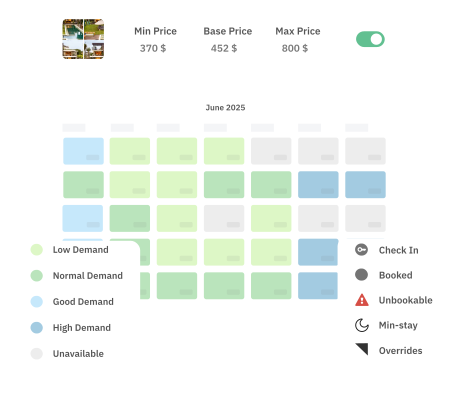
RevPAR is a straightforward way to measure performance across seasons. It’s calculated by multiplying your average daily rate by your occupancy rate, or equivalently by dividing total revenue by available nights. Because it balances price and fill, it’s ideal for tracking off-peak gains.
Dynamic Demand-Based Pricing
Dynamic pricing is the continuous adjustment of nightly rates based on changing market factors—competitor activity, lead time, seasonality, day-of-week patterns, and local events. Instead of guessing, software responds to booking pace and search signals in real time, nudging prices down to capture soft demand or up to protect high-demand dates. That responsiveness is crucial off-peak: it helps convert last-minute browsers into bookings before they move on to cheaper alternatives.
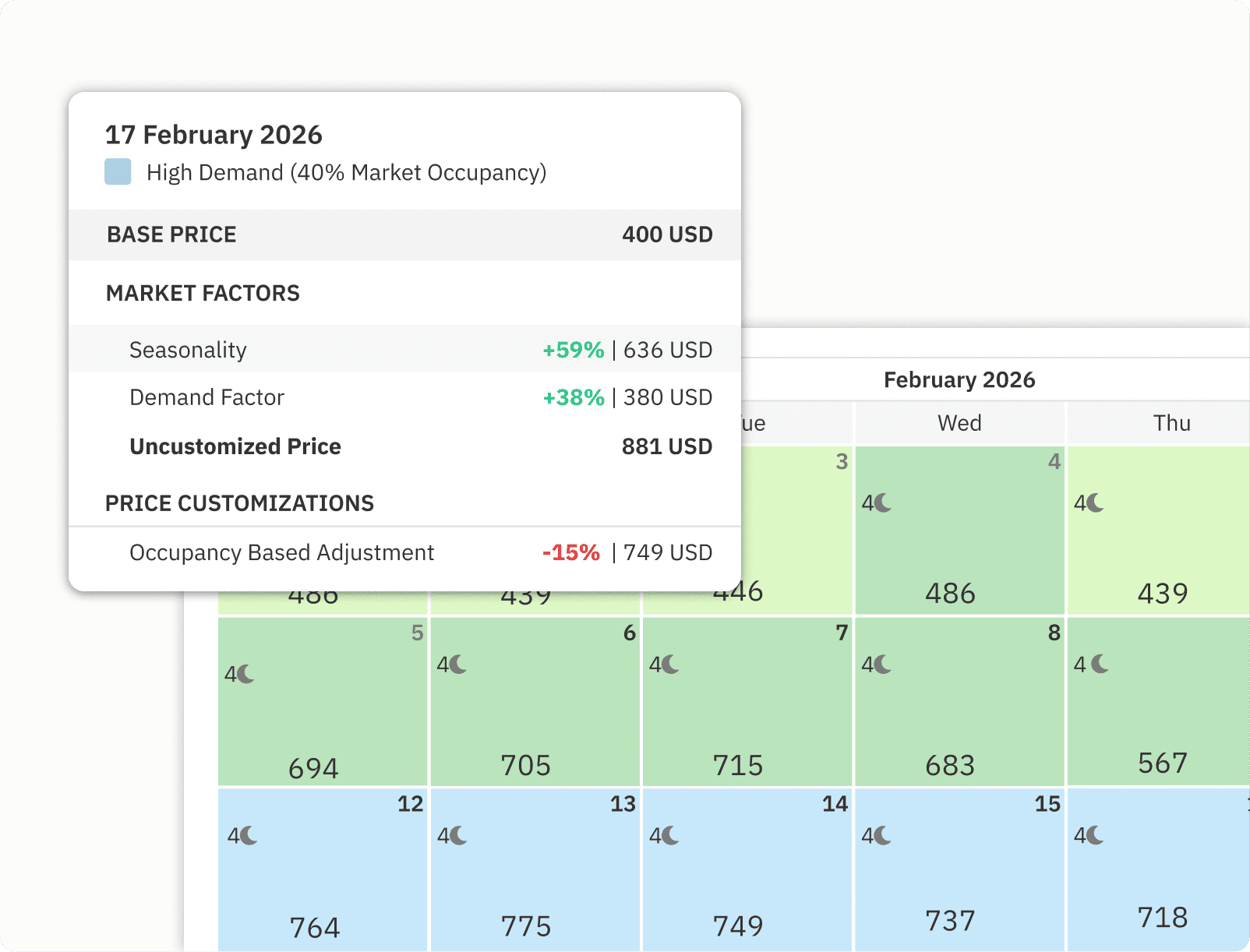
Manual vs. automated pricing at a glance:
| Dimension | Manual Updates | Automated Dynamic Pricing |
|---|---|---|
| Speed to adjust | Hours to days | Real time, daily or intra-day |
| Off-peak occupancy | Inconsistent, often late discounts | Earlier, right-sized price moves capture demand |
| Revenue protection | Prone to over/underpricing | Data-driven floors/ceilings and demand forecasts |
| Team time required | High, repetitive | Low, automated with clear recommendations |
Elasticity-Aware Discounts
Price elasticity in hospitality describes how much the likelihood of booking changes when the price changes slightly. AI-powered tools learn this sensitivity by analyzing your historical reservations and market responses. Instead of blanket markdowns, the software applies only the smallest discount needed to fill near-term gaps—especially valuable on slow weekdays or shoulder seasons. Some modern platforms embed elasticity modeling directly into their predictions, minimizing manual rule-setting and guesswork.

Typical off-peak discount tactics advanced platforms automate:
- Last-minute markdowns scaled by lead time and occupancy
- Weekday-specific reductions to balance uneven demand
- Early-bird pricing for thin seasons set months ahead
- Gap-filler discounts for short stays between longer bookings
- Length-of-stay incentives (e.g., 3-for-2 nights) when demand softens
Rule-Based Minimums and Caps Protection
Rate floors and ceilings are the guardrails that keep prices from dropping below (floor) or rising above (ceiling) your profitability and brand thresholds. These safeguards ensure that automated discounts never cross owner agreements or portfolio margins. In practice, effective systems make these minimum stay rules easy to apply and audit—an essential control for operators who juggle occupancy goals with owner commitments.
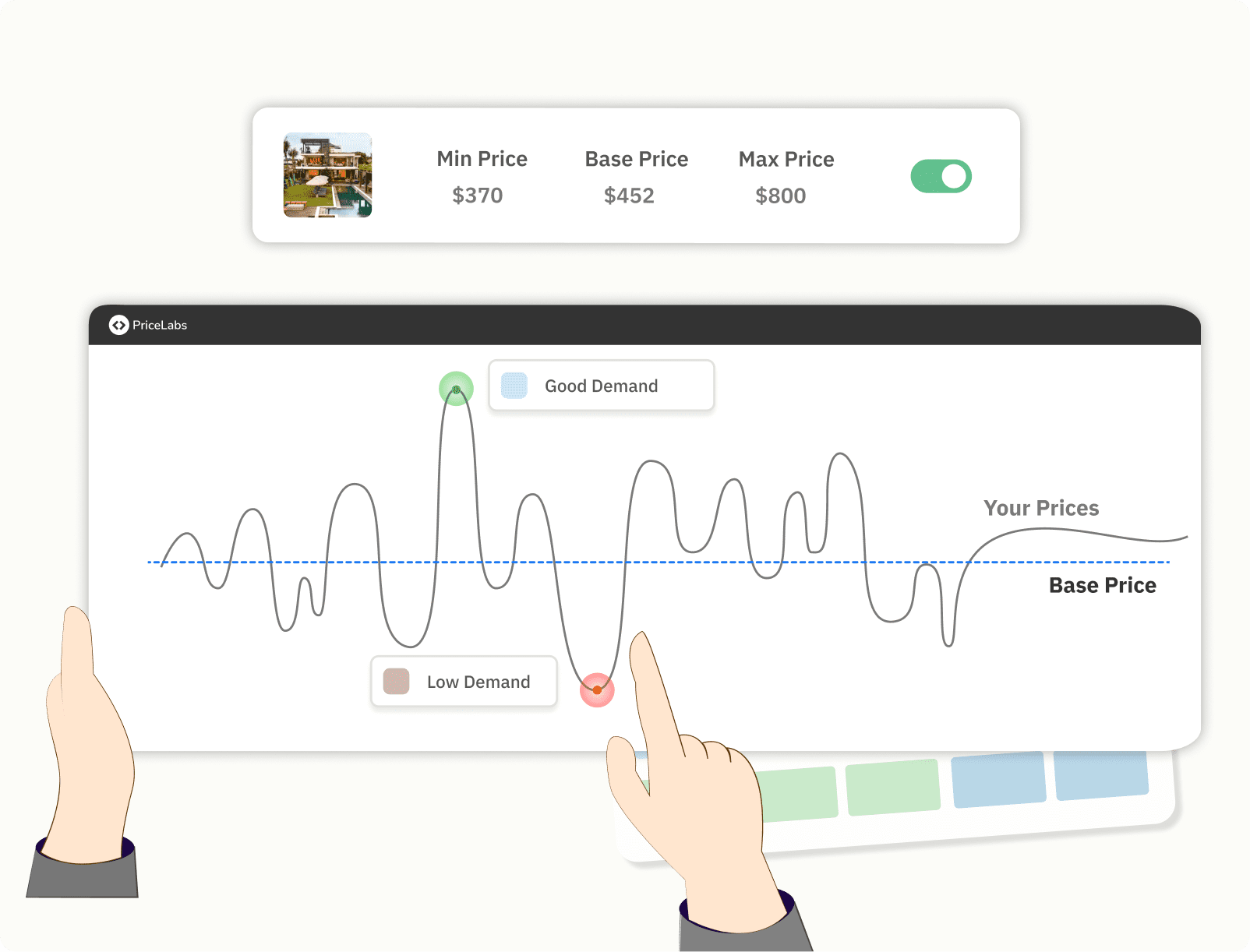
A simple rules flow for off-peak dates:
- Detect soft demand or unbooked gaps within X days
- Propose an elastic discount based on booking pace
- Check against property-level floor and minimum stay rules
- If above floor, publish; if not, cap at floor and log rationale
- Record the change for reporting and owner transparency
Inventory-Aware Pricing Strategies
Inventory-aware pricing ties rates and stay rules to your live calendar. When cancellations open short gaps, or when minimum nights block demand, software can adapt quickly—lowering prices for short stays during off-peak windows, relaxing minimum nights, or nudging prices across a building to balance utilization. This reduces manual tinkering and improves yield, especially for multi-unit operators who need consistent policies across many listings.
Benefits for multi-unit teams:
- Fewer stranded nights from rigid minimum-stay settings
- Automated gap-fill pricing for odd-length stays
- Smarter distribution of demand across comparable units
- Less time spent micromanaging calendars
Channel and Calendar Synchronization
Channel management is the coordination of rates, availability, and rules across all listing sites and your direct channel. Real-time integration prevents double bookings, underpricing on one site, or confusing inconsistencies for guests by pushing updates instantly across all sites.
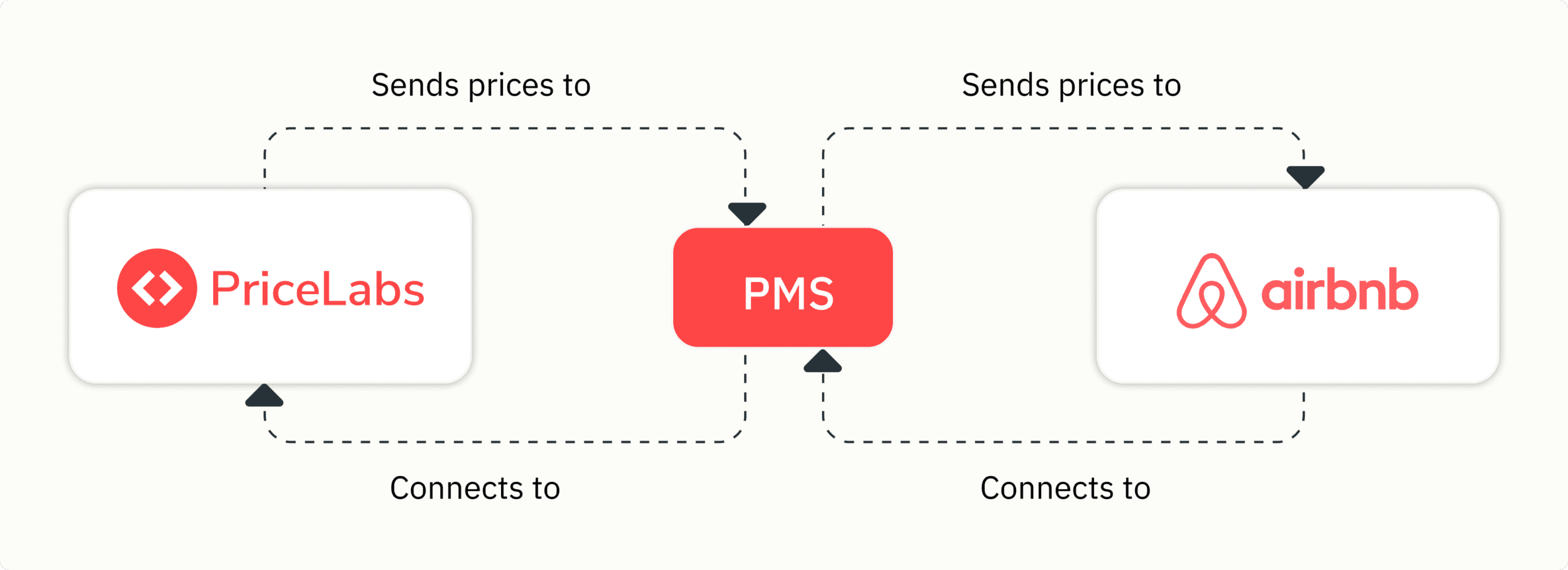
How automated sync works:
- Connect PMS/channel manager and OTAs to your pricing tool
- Import live availability, occupancy, and listing rules
- Publish optimized prices and stay within constraints to every channel
- Receive confirmations and log each update for auditability
- Monitor exceptions; alert the team only when action is needed
Automated A/B Testing and Experiment Tracking
A/B testing runs two or more pricing treatments on similar dates or listings to see which converts best. Software can randomize comparable nights, apply different markdowns or minimum-stay rules, and report which option wins on revenue, occupancy, or profit—letting you improve continuously without guesswork.
Off-peak A/B test ideas:
- 10% vs. 15% last-minute discount on weekdays
- 2-night vs. 3-night minimum stay during shoulder weeks
- Flat weekday markdown vs. elastic, lead-time-based markdown
- Gap-fill discount with vs. without cleaning-fee adjustment
- Early-bird price ladder starting at 90 vs. 120 days out
Real-Time Competitor and Market Monitoring
Market monitoring automates surveillance of competitor rates, local events, booking pace, and other demand signals—then adjusts your prices accordingly. Platforms scrape competitor availability, detect concerts or conferences, account for inflation and seasonality, and feed these signals into live price decisions.

For cross-city operators, see our guidance on multi-city Airbnb pricing to keep pricing logic consistent across markets while reflecting local nuance.
Transparent Guidance and Reporting
Automation must be explainable. Leading solutions provide clear dashboards that show what changed, why it changed, and the impact on occupancy and revenue. Transparent guidance means every recommendation comes with visible logic—event triggers, competitor moves, or pacing shifts—so teams and owners can trust the system. Activity logs, side-by-side tests, and portfolio rollups support governance and let managers intervene only when needed, not for every price change.
Frequently Asked Questions
Does dynamic pricing really increase occupancy during off-peak months?
Yes. By reacting to real-time demand signals and competitor moves, dynamic pricing lowers rates just enough to convert hesitant shoppers, filling nights that would otherwise remain vacant.
How does AI-driven pricing software adjust rates for slow demand periods?
It monitors booking pace, search and competitor data, events, and seasonality, then automatically nudges prices and stay rules to keep listings competitive during quiet weeks.
Can pricing software integrate with popular property management systems?
Yes. Modern tools—including PriceLabs—integrate with leading PMS and channel managers, enabling automated, synchronized pricing across all listings and channels.
What are common pricing strategies to maximize off-peak Airbnb revenue?
Use elastic last-minute discounts, weekday markdowns, length-of-stay incentives, gap-filler pricing, and real-time channel sync to improve visibility and conversion.
How do pricing rules protect profitability while offering discounts?
You set floors, ceilings, and minimum-stay rules so automated discounts never cross profitable thresholds, preserving margins while still capturing demand.