
Table of Contents
Updated : Feb 12, 2026
Managing a handful of properties is a juggle; managing a multi-unit portfolio is a high-stakes chess match. As we move through 2026, the short-term rental (STR) and mid-term rental (MTR) markets have become more sophisticated than ever. Guest booking windows are shrinking, and demand is concentrating around major global events such as the 2026 FIFA World Cup.
To stay ahead, manual price updates are no longer an option—they are a liability. With platforms like PriceLabs, the global leader in revenue management, currently pricing over 600,000 listings daily across 150+ countries. For multi-unit managers, PriceLabs provides the “brain” for your portfolio, using AI-driven revenue management to predict demand and set optimal rates that optimize your returns.
In this guide, we’ll dive into the 2026 automation toolkit designed specifically to help multi-unit leads scale efficiency without losing the human touch.
Unique Pricing Automation Features for Multi-Unit Portfolios
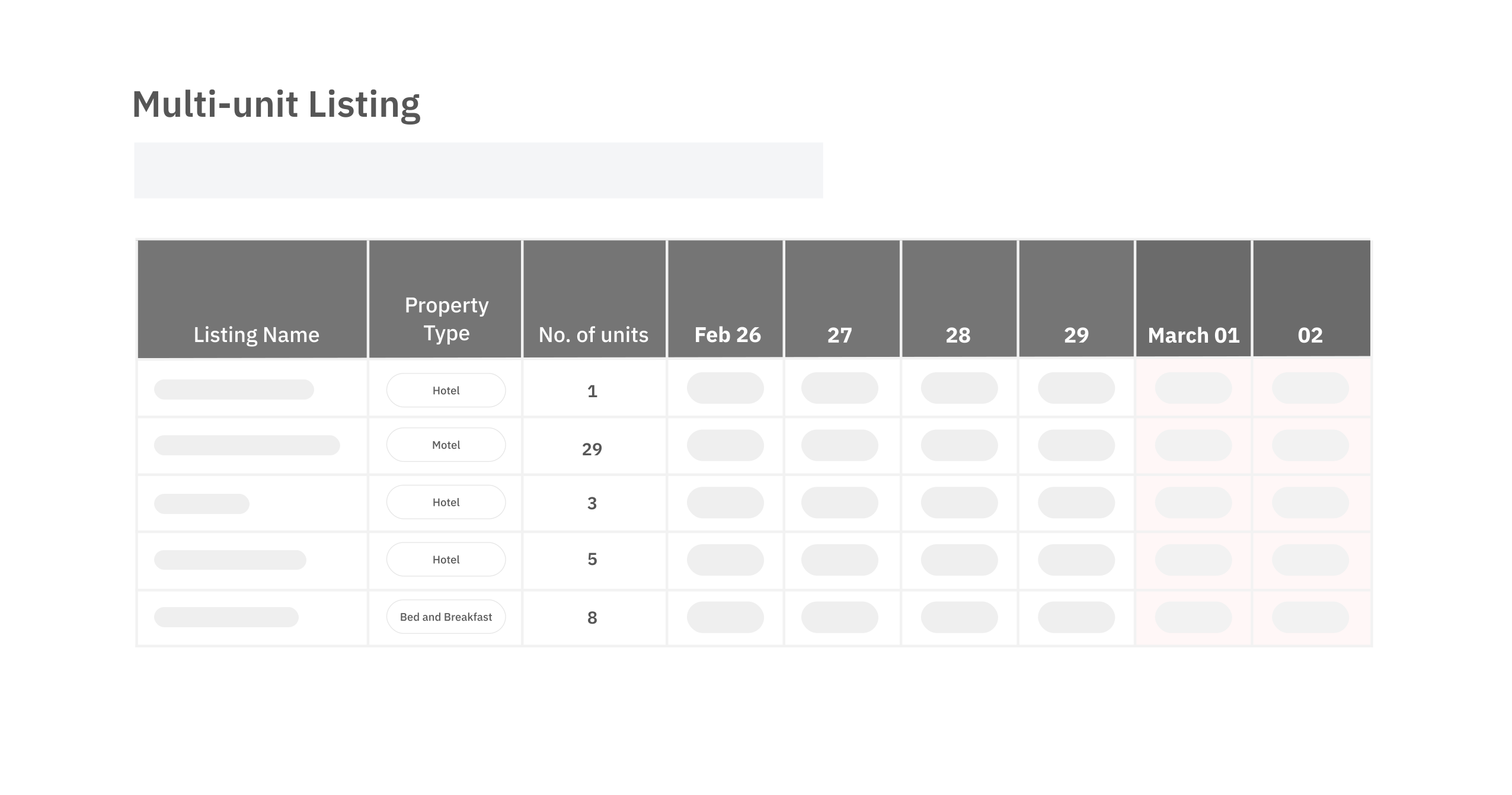
Scaling a portfolio often means managing “units of the same type”—like ten identical two-bedroom apartments in a single building. Pricing them all the same is a missed opportunity. PriceLabs solves this with hyper-granular tools:
Dynamic Pricing Automation: This isn’t just “setting and forgetting.” It’s the automated adjustment of nightly rates using real-time market data, competitor activity, and local demand signals to find the perfect price for every single night.
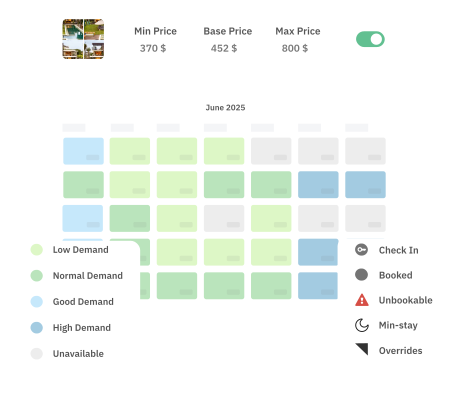
Portfolio Occupancy-Based Adjustments (POBA): This is the “secret sauce” for multi-unit managers. Portfolio occupancy-based adjustments refer to pricing models that adjust rates based on the collective occupancy of a group of units. If you have 10 identical units and 8 are booked, POBA automatically pushes the price of the last two higher to capture the remaining demand premium.
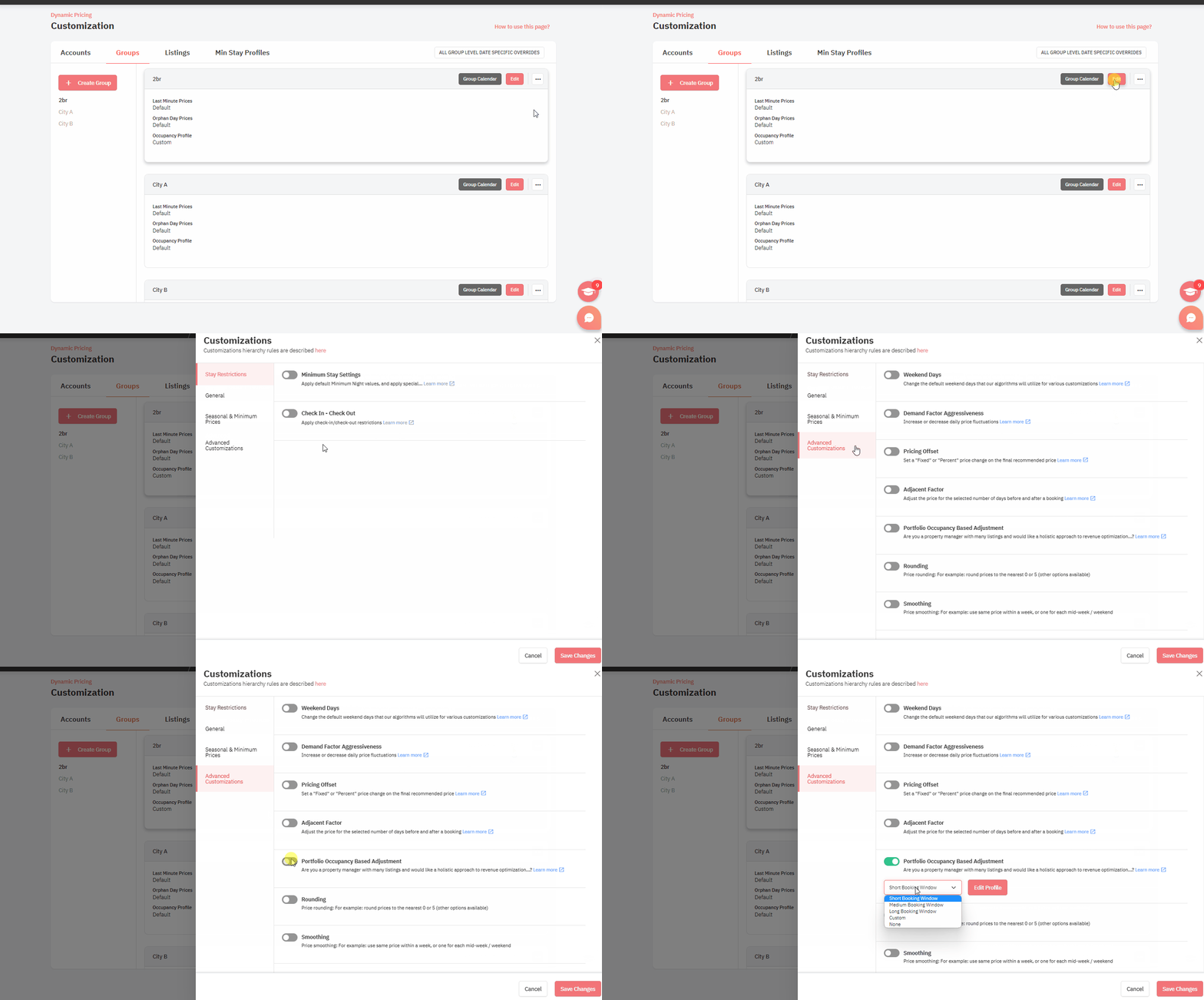
Unit-Specific Offsets: Just because units are in the same building doesn’t mean they are equal. You can use bulk automation for the “base” while applying offsets—like a 10% premium for a river view or a $20 upcharge for units with a balcony.
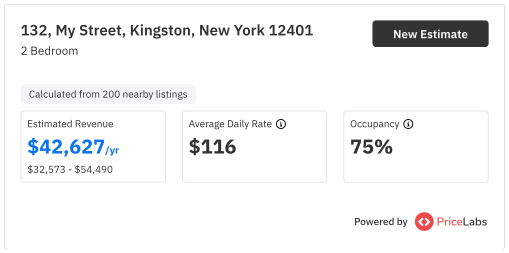
Revenue Estimator Pro: Before you even sign a new contract, use this to get instant, data-backed revenue projections for any address worldwide.
Ready to see the results for yourself?
Don't leave your 2026 revenue to chance. Join thousands of top-tier managers who use PriceLabs dynamic pricing automation for multi-unit portfolios to outpace the competition.
Start Your Free Trial NowThe Hybrid Approach: AI Intelligence With Human Oversight
We believe the best revenue management isn’t fully autonomous—it’s human-in-the-loop. While PriceLabs’ algorithm handles millions of data points, you retain the steering wheel.
The Automation Workflow
| Phase | AI/Automation Task | Manager Oversight |
| Daily | Hyper-local data scans & price uploads to PMS. | Review “Activity Logs” for unexpected spikes. |
| Weekly | Occupancy-based adjustments via POBA. | Audit underperforming units via Portfolio Analytics. |
| Monthly | Trend forecasting & seasonal shifts. | Adjust Base Prices or Min/Max guardrails for 2026 events. |
Dynamic Pricing and Custom Rule Controls
Multi-unit vacation rental management requires flexibility. PriceLabs’ custom rule engine allows you to apply “Bulk Rules” across the portfolio while maintaining “Listing-Level” exceptions.
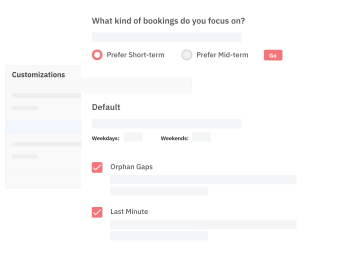
- Orphan Night Discounts: Automatically fill those awkward 1-2 night gaps between longer stays.
- Last-Minute Pricing: Set aggressive discounts for unbooked nights within the next 48 hours to ensure zero vacancy.
- Minimum Stay Logic: Use the MinStay Recommendation Engine to automatically require 4-night stays during peak 2026 event dates, then drop to 2-night stays as the date approaches.
Portfolio-Level Analytics and Market Dashboards
In 2026, real-time data is the backbone of successful revenue management automation. PriceLabs provides three distinct layers of visibility to ensure your strategy is backed by evidence, not guesswork.
1. Market Dashboards: Local Demand Intel
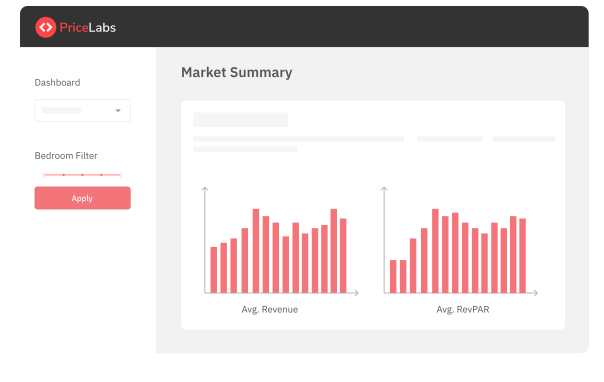
While automation adjusts your rates, Market Dashboards provide the strategic “why.” These interactive panels aggregate data from your specific micro-market to help you stay ahead.
- Hyper-Local Trends: Monitor real-time occupancy, booking windows, and competitor ADRs.
- Future-Facing Data: Spot upcoming demand spikes—like concerts or festivals—to capture early-booker premiums.
- Analyze Guest Preferences: With charts showing popular amenities, cancellation policies, cleaning fees, extra guest fees, and more, you will stay ahead of your guests’ preferences.
2. Portfolio Analytics: Your Executive Command Center
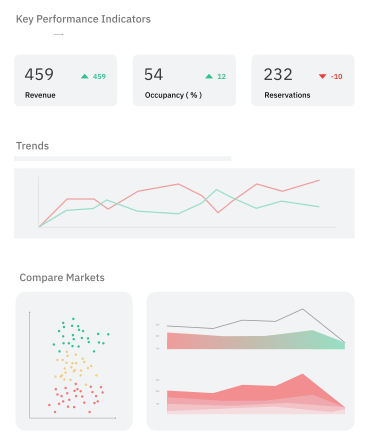
Portfolio Analytics focuses inward, offering a high-level health check of your entire inventory. It’s the essential tool for reporting performance to owners and stakeholders.
- Core KPIs: Track RevPAR, ADR, and Occupancy across all listings in one view.
- Performance Leaderboards: Instantly identify your top-earning clusters and underperforming laggards.
- Historical Comparison: Compare current pacing against last year’s data to ensure your growth is on track.
3. AI Insights: Natural Language Intelligence
One of the most significant evolutions in PriceLabs dynamic pricing automation for multi-unit portfolios is AI Insights. It allows you to query complex data using simple, natural language.
- Instant Answers: Ask, “Which properties have dropped in occupancy year-over-year?” for an immediate list of units needing attention.
- Anomaly Detection: Quickly identify properties with too many “orphan nights” or those priced significantly away from market recommendations.
- Actionable Strategy: Use AI to summarize portfolio-wide trends, turning hours of data mining into seconds of clear, strategic direction.
Seamless Integrations: The Tech Stack Foundation
Automation is only as good as its delivery. PriceLabs connects with over 160 Property Management Systems (PMS) and Channel Managers, as well as direct links to Airbnb and Vrbo.
A property management system acts as your central hub; PriceLabs acts as the engine. This integration ensures that when PriceLabs calculates a new rate, it is pushed to every OTA (Online Travel Agency) instantly, reducing manual entry and the risk of double-booking.
Ready to see the results for yourself?
Don't leave your 2026 revenue to chance. Join thousands of top-tier managers who use PriceLabs dynamic pricing automation for multi-unit portfolios to outpace the competition.
Start Your Free Trial NowBest Practices for 2026 Implementation
To optimize your portfolio’s yield in the current market, you need a rollout strategy that moves from broad strokes to surgical precision. Follow this 2026 deployment roadmap to ensure your automation is both powerful and protected.
1. The Portfolio Audit & Tagging Strategy
Before turning on the “Auto” switch, you must differentiate your inventory. Treating all units in a building as identical is a revenue leak.
- Granular Tagging: Tag units by floor level, renovation date, view (e.g., “Ocean Front” vs. “Partial View”), and specific amenities like private hot tubs or dedicated workspaces.
- Apply Pricing Offsets: Use these tags to set fixed or percentage-based Pricing Offsets. For example, a penthouse unit can be set to always remain $50 above the building’s base rate. This ensures your bulk automation handles the market fluctuations while your offsets preserve the value of your premium inventory.
- Contract Alignment: Tag units based on their management contract type (e.g., “Master Lease” vs. “Commission-based”) to apply different risk profiles to your pricing logic.
2. Setting a Data-Backed Base Price
Your Base Price is the most critical lever in the PriceLabs algorithm—it’s the anchor for all fluctuations.
- Base Price Help Tool: Avoid the “gut feeling” trap. Use this tool to analyze the last 365 days of booking data alongside future market demand.
- Monitor the Rec/Base Ratio: A key 2026 metric is the ratio between your Current Base Price and the Recommended Base Price. If this ratio sits far from $1.0$, your pricing is disconnected from the market. A ratio of $1.2$ suggests you are priced 20% above the market average for your caliber, which might be intentional—or a mistake.
- Seasonality Adjustments: For 2026, ensure your base price accounts for shifting “shoulder seasons.” Use the tool to set different base prices for high summer and mid-winter to give the algorithm a more accurate starting point.
3. Progressive Monitoring & The Stabilization Phase
Automation doesn’t mean “unattended.” Successful managers use a tiered oversight approach:
- Phase 1: Monitored Mode (Weeks 1–4): During the initial rollout, perform Daily Performance Checks. Focus on the “Activity Log” to see why the algorithm moved a price. Look for “Rate Shocks”—unusually high or low bookings—and adjust your Min/Max stay and price guardrails accordingly.
- Phase 2: The Shift to Weekly Reviews: Once your vacation rental KPIs (Occupancy and RevPAR) stabilize and align with your targets, transition to a Weekly Deep Dive. Use the Portfolio Analytics dashboard to identify “laggards”—the bottom 10% of units by revenue—and apply custom rules to stimulate demand.
- Phase 3: Transparency via APIs and Widgets: In 2026, owner retention is about trust. Use PriceLabs APIs to feed real-time pricing data into your internal BI tools or custom owner portals. Use Pricing Widgets on your website to show prospective guests (and owners) that your rates are dynamic and market-justified. This level of transparency reduces “Why is my unit unbooked?” emails by providing the data before the question is even asked.
Frequently Asked Questions
How does PriceLabs manage multiple units in one building?
By using Portfolio Occupancy-Based Adjustments (POBA), the system analyzes the occupancy of the entire group. As the building fills up, the scarcity of remaining units triggers an automatic price increase to optimize revenue on the last few keys.
Can I stop the AI from pricing too low?
Yes. You have total control via Minimum Price guardrails and “Safety Minimums.” These act as a floor, ensuring your rates never drop below your operational costs, no matter the market condition.
Does PriceLabs pick up on local events like concerts?
Absolutely. Our Hyper Local Pulse (HLP) algorithm detects demand spikes in real-time. It identifies “compression” in the market—often before the event is even officially announced—allowing you to capture early-booker premiums.